For years, Elon Musk has been the loudest voice in the global tech community when it comes to predicting the future of artificial intelligence. Sometimes his tone is cautious, other times surprisingly optimistic. But at the recent US–Saudi Investment Forum, Musk put forward one of his boldest ideas yet: AI and humanoid robots won’t just change the world they will make everyone wealthy and eliminate poverty altogether.
It’s the kind of statement that instantly grabs headlines. And why wouldn’t it? At a time when people are losing jobs, industries are panicking, and entire sectors are being reshaped by automation, here comes Musk saying the machines that many fear will actually become humanity’s greatest equalizer.
But beneath that excitement is a much bigger question:
Is Musk just painting a futuristic dream, or is there a real possibility that AI-driven prosperity could spread to every corner of society?
This is where things get interesting.
Why Musk Believes AI Will Make Poverty Disappear
At the forum, Musk claimed that the world has attempted countless strategies to eliminate poverty economic reforms, welfare systems, global aid, structural changes but none of them have created a poverty-free world. According to him, only one force truly has the power to do that:
Technology.
More specifically, Musk believes that:
-
AI will take care of all essential human jobs
-
Humanoid robots will perform physical labor at scale
-
The cost of producing anything will fall dramatically
-
A world of abundance will make currency “irrelevant”
He went so far as to suggest that in the future, humans would not need money in the way we understand it today. “Currency becomes irrelevant,” he said, implying that when machines take care of everything needed for survival and comfort, money ceases to be a central part of human existence.
That’s a massive statement.
It essentially flips the entire foundation of global economics upside down.
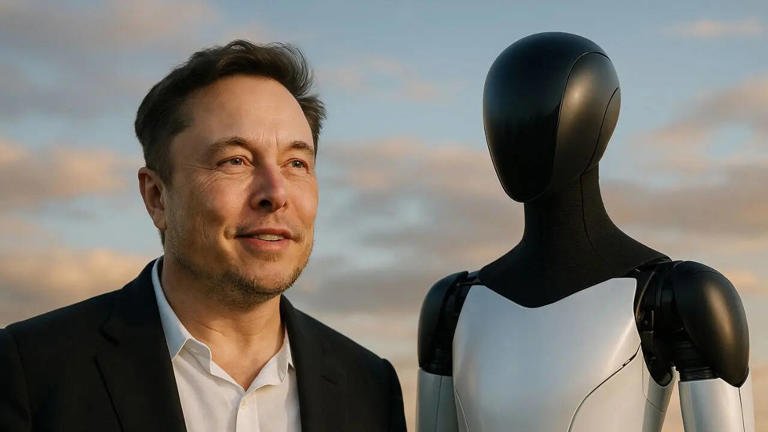
And Musk doubled down: Tesla wouldn’t be the only company building robots like Optimus. The world will have multiple robot-making giants, creating so much machine-generated productivity that scarcity itself disappears.
What Does Life Look Like in This “Robot Economy”?
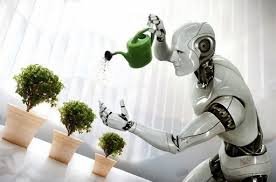 Musk briefly described a future in which people don’t work jobs for survival. Instead, they spend their time:
-
Growing vegetables in their garden
-
Experiencing nature
-
Spending time with family
-
Pursuing hobbies
-
Exploring science, art, culture
It sounds almost philosophical like a future society where humans return to a simpler, calmer way of living, while machines handle the stress-driven part of life.
In Musk’s view, AI is not taking away jobs it’s removing the concept of “jobs for survival” altogether.
This is not the first time Musk has made such claims. He has repeatedly said that artificial general intelligence (AGI) and advanced robotics could lead to a society where:
-
Universal basic income (UBI) becomes essential
-
People work only because they want to, not because they must
-
Material scarcity becomes a non-issue
-
Economic inequality reduces dramatically
His latest comments simply reinforce the vision he has held for years.
But a dream is one thing. Turning it into reality is something else entirely.
Why People Are Skeptical The Job Loss Fear Is Real
Even while Musk speaks confidently about an abundant future, the world feels something very different: uncertainty.
In the last few years alone:
-
Customer service teams have been replaced by chatbots
-
Content writing, marketing, editing, and coding have seen huge automation leaps
-
Factories are shifting toward robotic labor
-
Companies are relying on AI for design, research, analytics, and even decision-making
Humanoid robots like Tesla’s Optimus and Figure 01 are already performing basic tasks like:
-
Lifting boxes
-
Sorting items
-
Picking up objects
-
Performing simple assembly work
For millions of workers worldwide, especially in developing countries, the fear is not “robots will make us wealthy” but “robots will make my job irrelevant.”
This is where Musk’s optimism clashes with today’s reality.
Until society has a system in place that ensures economic safety for displaced workers, AI’s rise will naturally trigger fear, not excitement.
What Musk Gets Right About the Power of Tech
Even though Musk’s prediction feels extreme, he has a point. Technology has historically been the biggest driver of human progress:
-
Automobiles changed transportation
-
Computers changed work
-
Smartphones changed communication
-
The internet changed information access
-
Medical technology drastically increased life expectancy
Every major technological leap produced:
-
New industries
-
New skill demands
-
Higher productivity
-
Economic growth
AI and humanoid robots might simply be the next step in that evolutionary chain but at a scale humanity has never seen before.
Here’s where Musk’s argument gains credibility:
1. Robots Don’t Get Tired
A single humanoid robot could work 24 hours a day without breaking down. That one factor alone could multiply global productivity massively.
2. AI Can Solve Problems Faster Than Humans
Advanced AI models can now:
-
Generate research findings
-
Run simulations
-
Predict outcomes
-
Optimize large systems
-
Analyze data
-
Create new products
-
Discover new materials
What took months or years earlier might now take days or hours.
3. The Cost of Production Could Drop Drastically
If robots are doing all the labor, the cost of manufacturing almost anything should fall sharply food, homes, energy, clothing, transport. This is how Musk imagines a world without poverty: when everything becomes cheap enough to be accessible to everyone.
Where Musk’s Vision Faces Real-World Challenges
Even if AI and robots become capable of generating abundance, there are huge obstacles:
1. Who Owns the Robots?
If only a handful of powerful companies control AI and robotics, then wealth will concentrate, not spread.
2. Government Policies Are Slow
AI is evolving rapidly. Regulations, on the other hand, move painfully slow.
For poverty to disappear, countries would need:
-
Universal basic income
-
Equal access to technology
-
Affordable electricity
-
Digital infrastructure
-
New education systems
Most nations are nowhere close.
3. Moral and Ethical Issues
If people don’t work for money, what motivates society?
How do you measure achievement?
What replaces the structure of daily work?
These are questions humanity hasn’t answered yet and will take decades to figure out.
4. Fear of Losing Control
Many experts worry that giving too much autonomy to machines could create new risks:
-
AI-driven misinformation
-
Autonomous weapons
-
Data manipulation
-
Power imbalances between nations
-
Potential misuse by governments
The world doesn’t agree on how to handle AI responsibly which complicates Musk’s utopian vision.
Is Musk’s Prediction a Vision or a Warning?
 There’s an interesting twist here: sometimes Musk makes outrageous predictions not to excite people, but to push society into preparing early.
When he talks about:
-
AGI risks
-
Job automation
-
Robot-driven economies
-
AI ethics
-
Future abundance
He’s also indirectly telling governments, educators, and businesses:
“Start preparing now. Huge change is coming, whether you like it or not.”
Musk’s statement that robots will end poverty might not be entirely literal.
It may be a way to emphasize that the world is on the verge of a technological revolution, and failing to prepare could lead to:
-
More inequality
-
More job displacement
-
More instability
His prediction could be both a dream and a warning.
What We Can Expect in the Next 10–20 Years
If current trends continue, here’s what the next two decades might realistically look like:
-
Humanoid robots become common in factories
-
AI handles 50–60% of global office work
-
Most routine jobs become fully automated
-
New industries around robot maintenance, AI regulation, and ethics emerge
-
Universal basic income becomes a serious global discussion
-
The cost of basic products drops significantly
-
People work fewer hours
-
Creative, social, and emotional skills become more valuable
These changes alone won’t eliminate poverty completely but they can reduce it drastically if governments respond wisely.
Musk’s Dream Is Possible, But Only If Humanity Moves Together
Elon Musk’s statement that AI and humanoid robots will make everyone wealthy and remove poverty sounds futuristic, almost like science fiction. But underneath the grand prediction lies a very real idea: technology has always lifted societies, and AI might be the most powerful tool humanity has ever created.
The real challenge is not the technology itself. It’s how humans choose to use it. If AI and robotics become tools for equality, shared prosperity, and accessible abundance, Musk could very well be right. But if ownership remains concentrated, regulations remain outdated, and societies fail to adapt, the future could look very different from the utopian vision. For now, Musk’s idea remains a possibility, not a guarantee. And whether it becomes reality depends on decisions the world makes today. To know more subscribe Jatininfo.in now.