
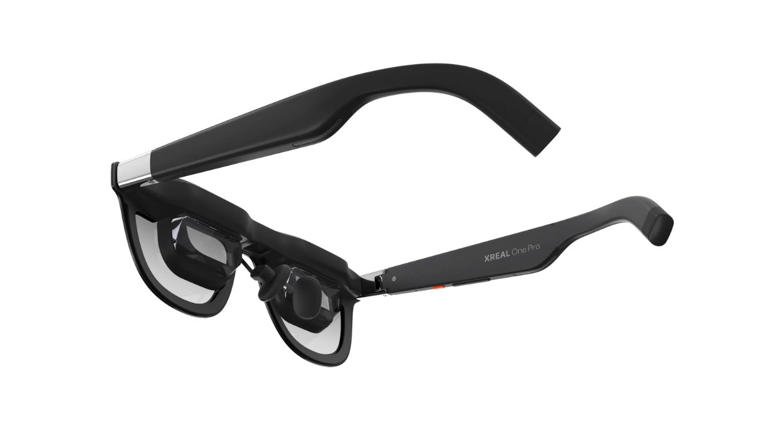
The world of consumer augmented reality has been moving quickly, but every once in a while, a product shows up that feels like it shifts the conversation in a noticeable way. XReal’s newly launched XReal 1S smart glasses fall into that category. Announced first in Japan, the device is positioned as a more accessible version of the company’s premium AR eyewear, but that description barely scratches the surface. XReal has packed in enough new features especially the real-time conversion of standard 2D video into 3D that the 1S ends up standing on its own as a major upgrade instead of a modest iteration.
AR glasses have always been caught in an awkward balancing act: high expectations, steep prices, and inconsistent real-world usability. But the 1S seems to make a conscious attempt to break out of that cycle. These glasses don’t pretend to replace your phone or laptop; instead, they aim to enhance everyday content by giving users a floating screen that feels more immersive without requiring a steep learning curve.
Let’s dive deeper into how XReal is trying to change the game, why this device is attracting attention, and what the future of lightweight AR might look like now that real-time 3D conversion is a reality.
A New AR Experience in the Making
To understand the hype behind the XReal 1S, it helps to look at what AR glasses typically struggle with. Most previous consumer-grade options have had issues with brightness, weight, clarity, comfort, or simply the lack of compelling use-cases. What makes the 1S interesting is that XReal seems to have specifically targeted these problem areas rather than pushing gimmicks.
The headline feature the automatic conversion of 2D videos into 3D isn’t a small thing. It’s something people have imagined but never really seen in a compact, plug-and-play consumer device. Instead of waiting for studios to release 3D-ready content, users can take any movie, show, game, or YouTube video and instantly view it in a spatial format.
That alone gives it an edge in a market that has been waiting for something more practical and fun than complex “mixed reality” demos.
The Technology Behind the 2D-to-3D Conversion
 A lot of innovations sound exciting on paper but fall short in execution. What’s surprising here is how XReal has implemented the conversion process through its X1 spatial chip, which is essentially the brain responsible for reading, adjusting, and re-projecting standard 2D content into a layered view.
When a user activates the 3D mode, the chip reworks every frame, applying depth, distance cues, and distortion corrections across thousands of tiny nodes. The result isn’t a cheap cardboard-style 3D effect; it’s closer to a floating cinema screen where scenes feel deeper, more layered, and more anchored in space.
There is a small trade-off: the refresh rate drops from the usual 120Hz down to 30Hz when 3D mode is active. But given how complex the frame generation is, that is expected. Latency still stays remarkably low close to 3 milliseconds, which is unusual in AR products under this price category.
In short, XReal isn’t just adding a filter; they’re using a well-trained optical engine to build spatial content on the fly.
Sony Micro-OLED Panels and Upgraded Optics
One of the strongest parts of the XReal 1S package is its new optical system. The glasses use Sony-made 0.68-inch micro-OLED panels, which already sets a premium tone. Each display outputs a 1920 x 1200 resolution, which feels clean enough for long sessions without visible pixelation.
The refresh rate maxes out at 120Hz, and brightness has been pushed to 700 nits, a noticeable improvement over earlier XReal models. A brighter panel is crucial because AR glasses often struggle in environments with too much ambient light. With these upgrades, the 1S becomes more usable outdoors or in well-lit rooms.
The field of view now 52 degrees might not sound massive compared to VR headsets, but for a lightweight pair of glasses, it’s a comfortable sweet spot. The virtual screen feels large enough to be immersive yet natural enough for casual viewing.
XReal seems to understand that AR glasses aren’t supposed to overwhelm; they’re supposed to blend into your routine.
Comfort, Weight and A More Practical Design
One reason many people avoid AR glasses is comfort. A few minutes of use is okay, but wearing them for an entire movie or long gaming session? That’s where most models struggle.
The XReal 1S improves things in a few clever ways:
Lightweight Frame
At 82 grams, these are lighter than the standard “One” model. The difference may not sound dramatic until you wear them. Every gram matters when the device sits on your nose for hours.
Flexible Temples and Adjustable Hinge
The arms of the glasses can flex more easily around different head shapes. The hinge has also been redesigned for better weight distribution so the glasses don’t pinch or slide.
Variable Light Transmittance
Users can adjust the light transmittance to 0%, 35%, or 100%. This helps in different settings—dark rooms, bright spaces, outdoor travel, and so on.
Unlike heavy VR headsets that isolate you, the 1S tries to maintain a balance where you can still remain aware of your surroundings if you prefer.
Sound That Doesn’t Feel Like an Afterthought
Good display tech doesn’t mean much if audio fails, especially when the goal is immersive entertainment. This time, XReal worked with Bose-supervised tuning for its new open-ear speakers.
The result is Spatial Sound 4.0, which delivers a wider soundstage and much clearer voice playback. These speakers sit near the ears, creating an airy, open audio experience. While outside noise won’t be blocked it’s not meant to it’s still far better than tinny, directional sound found in most lightweight AR products.
The 1S also packs four microphones with enhanced noise reduction to make calls clearer. It uses a voice-focus system to isolate speech, but since the design is open-ear, loud outdoor environments will still be a challenge.
Still, for most users, especially indoors, the audio upgrade feels meaningful.
The Neo Battery Pack: More Than Just Power
For many AR glasses, battery life is an ongoing issue. Users often need to connect through a smartphone or rely on small built-in batteries, which reduces portability. XReal’s solution is the Neo, a 10,000 mAh power bank designed specifically for the 1S and other XReal models.
But it does more than charge the glasses it also supports pass-through video, letting it act as a docking device. Nintendo Switch users will appreciate this feature since it allows game output directly through the glasses without needing the main console dock.
For travellers, gamers, and commuters, this small accessory expands the use-cases considerably.
Pricing and What It Means for the Global Market
 In Japan, the XReal 1S is priced at ¥67,980, which roughly converts to ₹40,000 in Indian currency. The Neo battery pack costs ¥14,580. There’s also a bundle priced at ¥76,560, which is fairly competitive considering the features.
Global availability is expected soon, and if pricing follows the pattern of older XReal products, it may arrive just slightly above the price of the current XReal One, which retails for around $399 internationally.
If the price stays within that region, the 1S could easily grab the attention of:
-
movie lovers
-
gamers
-
students
-
frequent travellers
-
content creators
-
tech enthusiasts trying AR for the first time
Its value proposition is simple: cinematic screens anywhere without carrying bulky hardware.
A Step Forward for the AR Industry
AR glasses have had a reputation for being futuristic but impractical. The XReal 1S doesn’t claim to change the world. Instead, it makes spatial displays feel more everyday more “normal.” That’s perhaps the biggest progress AR needs right now.
Reading, watching movies, playing games, joining video calls, or using apps on a floating screen can genuinely feel useful when the hardware is comfortable and the visuals are good enough.
The addition of real-time 3D conversion is a milestone. It opens doors to new content experiences without needing content creators to catch up first.
For an industry waiting for its mainstream moment, this is the kind of innovation that nudges AR closer to reality.
A Meaningful Upgrade, Not a Marketing Gimmick
The XReal 1S is an impressive combination of refined design, practical engineering, and a unique feature that sets a new benchmark. It isn’t trying to be the smartest device or the most powerful. It’s trying to be the most usable.
And in that goal, it succeeds far better than expected.
-
Brighter display
-
Lightweight body
-
Better audio
-
Wider FOV
-
Sony micro-OLED panels
-
Real-time 2D-to-3D
-
Low latency
-
Optional Neo battery pack
If global pricing is right, the 1S could become one of the best entry-level AR glasses available powerful enough for enthusiasts yet simple enough for new users who want a taste of spatial displays without jumping into high-end ecosystems. To know more subscribe Jatininfo.in now.