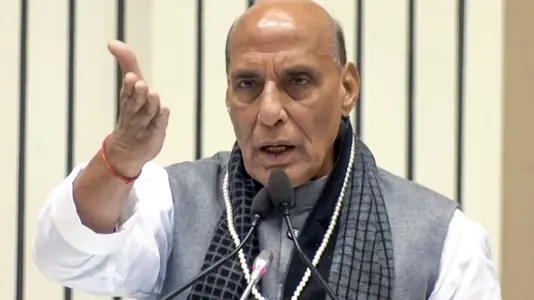
Indian politics often turns toward history when it tries to justify the future. That’s precisely what happened at a Delhi public gathering when Defence Minister Rajnath Singh linked the country’s past with its present political agenda. He invoked the legacy of L.K. Advani, one of the architects of modern Hindu nationalism, and used an unexpected line to support the Citizenship Amendment Act (CAA):
“Who knows tomorrow Sindh may return to India.”
The statement was dramatic, calculated, and revealing. It was not simply about borders or national pride it positioned the CAA as a tool of long-term civilizational strategy. And like many political moments in India, it triggered arguments that stretched across ideology, history, and geopolitics. This blog explores what Rajnath Singh said, why he said it, how the audience responded, and what the comment means in the larger Indian-Pakistani narrative.
Why Sindh Was Mentioned at All
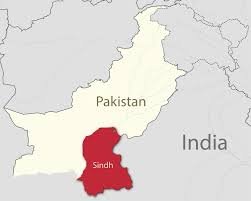 Sindh is not just a province of Pakistan it is a symbol. It is the birthplace of Hinduism’s earliest urban culture, home to Indus Valley civilisation sites like Mohenjo-daro, and historically a region where Hindus, Sikhs, and Muslims shared economic, linguistic, and cultural ties.
When Singh invoked Sindh, he was not just referring to geography. He was pointing toward a memory:
A subcontinent where millions of Hindus lived peacefully long before Partition, forced to flee when the map was redrawn in 1947.
The audience understood the emotional undertone immediately. Many who support the CAA see it as repayment of a historical debt an attempt to provide refuge to communities who lost their homes in newly created Islamic Pakistan and Bangladesh.
The Political Stage: Rajnath, Advani, and the BJP Narrative
It is not accidental that Advani was invoked. The former Deputy Prime Minister is himself from Karachi, in the Sindh region. His political life has been one long argument that Hindus across borders belong to a single civilizational homeland. Rajnath Singh, by referencing him, signaled that BJP’s contemporary decisions are not isolated they are continuations of an older ideological lineage. Advani spent decades building the view that the Indian state should protect all Hindus, everywhere, regardless of borders. Rajnath’s comments slot the CAA into that same frame: not as a legal instrument, but as a civilizational commitment. For supporters, this is loyalty. For critics, it is revisionism.
What Rajnath Singh Meant by “Sindh May Return”
Let’s be clear: Rajnath Singh did not announce an invasion or propose annexing Pakistani territory. His sentence functioned as rhetoric. But rhetoric in politics is never meaningless it signals a dreamscape that supporters can rally around.
There are three possible interpretations:
1. Cultural Return
A metaphorical idea of reconnecting with the Hindu past, allowing displaced communities to reclaim identity.
2. Demographic Return
Suggesting that Sindhis who migrated to India, like the families of Advani, have already “returned,” and more may do so through CAA-like protections.
3. Geopolitical Wormhole
The most provocative interpretation hinting that the political reality of South Asia is malleable, and borders drawn in 1947 might not be eternal.
The third interpretation is the one that generated headlines, though Rajnath never openly endorsed it. Political language often thrives in ambiguity: enough meaning to energize supporters, not enough detail to create diplomatic disasters.
The Citizenship Amendment Act:
 To understand Rajnath’s remarks, you must understand the CAA, which was introduced in 2019.
The law helps non-Muslim minorities Hindus, Sikhs, Buddhists, Jains, Parsis, and Christians from Pakistan, Bangladesh, and Afghanistan to obtain accelerated Indian citizenship if they faced religious persecution.
Critics argue the CAA violates secular principles and discriminates based on religion. Supporters counter that it compensates for a historic injustice: when Partition carved out Muslim-majority states, minorities were left vulnerable.
Rajnath’s speech framed CAA not as a policy but as a moral duty.
To him, India is not merely a republic it is a refuge.
Why the Timing of This Statement Matters
Indian politics is strategic. No major leader delivers big lines casually. Rajnath’s remarks came at a moment when the BJP is polishing its narrative ahead of national elections. The party wants to position itself as:
-
The protector of Hindu civilization
-
The stabilizer of an unstable neighborhood
-
The political heir to leaders like Vajpayee and Advani
In the BJP’s electoral storytelling, the CAA is more than paperwork it is emotional currency. It reminds Hindu migrants that their wounds matter, that India sees their trauma, and that the ruling party claims responsibility for their safety.
Singh’s “Sindh may return” line didn’t target policy analysts it targeted hearts.
Pakistan Is Always the Silent Character
Indian speeches about Sindh rarely mention Pakistan directly. And yet, Pakistan is the silent character in the room.
To the Indian nationalist imagination, Pakistan is:
-
The country that betrayed Hindus during Partition.
-
The neighbor that weaponized religion.
-
The state that cannot protect its minorities.
-
The unstable twin that India was forced to outgrow.
To Pakistan’s political vocabulary, India is:
-
The aggressor who never accepted Partition.
-
A Hindu majoritarian state in denial.
-
A regional hegemon dressed in democracy.
This hostility is baked into history.
Rajnath’s words poked that wound deliberately.
Sindhi Identity: Neither Indian Nor Pakistani Alone
The tragedy of Partition is that it created borders where there were none. Sindhi identity is broader than modern nationalism:
-
Language: Sindhi predates Urdu.
-
Trade: Sindh merchants connected the Gulf, Rajasthan, and Gujarat.
-
Religion: Sindh historically nurtured syncretism Sufi Islam, Bhakti Hinduism, Sikh influences, Jain traders.
When Partition forced Sindhi Hindus to migrate, they didn’t simply cross a line; they left behind centuries of cultural soil.
That deep cultural loss is why Rajnath’s remark connected emotionally, even if it had no literal policy behind it.
Critics Push Back: “Don’t Romanticize History”
Not everyone in India is enthusiastic about reopening old wounds.
Liberal Voices
They argue that invoking Sindh fetishizes pain, turning refugees into political symbols. If the government cares about persecuted minorities, they ask, then why exclude Muslim groups like the Ahmadiyyas or Shias?
Secularists
They insist the Constitution does not recognize a “Hindu homeland.” India, they say, belongs to all faiths equally. They fear the CAA is a wedge toward redefining citizenship around religion.
Realists
They warn that statements like “Sindh may return” destabilize diplomatic equilibrium. Pakistan is fragile; hinting at territorial revisionism risks escalation.
Supporters Respond: “History Cannot Be Ignored”
Pro-CAA voices counter with a different moral logic:
-
Pakistan was founded on religion.
-
India absorbed millions of Muslims without discrimination.
-
Minorities who fled Islamic states did face persecution.
-
Partition violence has never been addressed properly.
They argue that secular outrage ignores lived trauma. To them, CAA is not aggression it is closure.
The emotional punchline in their argument is this:
“If India can’t protect Hindus, who will?”
Rajnath’s Sindh comment gives that sentiment a poetic home.
Rajnath’s Persona and Why His Words Matter
Rajnath Singh is not a firebrand politician like some in his party.
He is measured, respectful, and soft-spoken. When he uses provocative language, people assume he has a reason.
He is also not a newcomer. Rajnath comes from an era before Twitter politics when speeches were crafted for memory, not algorithms. His Sindh remark was not a mistake; it was intentional communication, aimed to evoke nostalgia and pride without triggering explicit conflict.
This subtlety is why his statements ripple deeper than a typical rally soundbite.
Is This a Promise or a Provocation?
No one in New Delhi believes Sindh will literally rejoin India in the next decade. Pakistan is nuclear, militarized, and fiercely territorial. The comment was not a roadmap; it was a narrative tool. But narratives matter. India’s political direction is shifting from constitutional nationalism to civilizational nationalism. For many supporters, this is restoration, not radicalism India returning to its pre-Partition mindset. For critics, it is dangerous revisionism:
a rewriting of the past to justify exclusion in the present. Both cannot be right, and both cannot be ignored.
What Happens Next?
Rajnath’s speech will fade. Headlines will rotate. Another political moment will replace it. But something deeper has been set in motion:
-
The CAA is no longer discussed as a legal instrument it is framed as history’s correction.
-
Migration trauma is becoming a political lever.
-
India’s ruling party is reframing territory as heritage.
Whether this leads to inclusion or exclusion depends on how India responds to disagreement. Will public debate shape policy? Or will emotion drown nuance?
A single sentence “Tomorrow, Sindh may return to India” cannot redraw maps. But it can redraw imaginations. It awakens memories of Partition, invokes legacies of leaders like L.K. Advani, and signals that India’s political identity is entering an era of myth and restoration. Some hear the words and feel vindication. Others hear the same words and feel dread. This is the nature of politics in South Asia: every memory is a weapon, every wound a slogan, and every story a battlefield. The CAA debate was already heated. Rajnath Singh didn’t cool it he poured old history into the fire. And in doing so, he reminded both supporters and critics that India’s past is never truly past. It is a compass, a fault line, and a prophecy one that everyone interprets differently. To know more subscribe Jatininfo.in now.