When NASA confirmed the successful launch of the EscaPADE mission, it marked the beginning of a new chapter in Mars exploration. Unlike the iconic rovers or the heavier orbiters that have defined past missions, EscaPADE is a different kind of experiment. It is lighter, simpler, more cost-efficient and designed to answer questions that have puzzled researchers for years regarding how Mars slowly lost its atmosphere. With its two spacecraft now on a long, two-year cruise toward the Red Planet, the mission represents NASA’s evolving strategy exploring smarter, not necessarily bigger.
The departure of EscaPADE is more than just another box checked in NASA’s long roadmap of interplanetary missions. It is a demonstration of what happens when the boundaries of engineering, budget limitations and scientific curiosity meet each other at the right moment. The mission is small, but the questions it addresses are monumental. And the answers may reshape our understanding of Mars’ past, its present and, importantly, its potential future as a human destination.
Understanding the Vision Behind EscaPADE
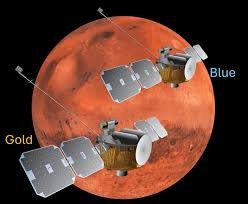
EscaPADE, short for Escape and Plasma Acceleration and Dynamics Explorers, consists of two nearly identical spacecraft named Blue and Gold. They are classified as smallsats, meaning they weigh far less than traditional orbiters. Their scale does not diminish their scientific importance. If anything, their design represents a new philosophy: future interplanetary research may rely as much on fleets of small cooperative spacecraft as on single, heavy flagship NASA’s missions.
These NASA’s spacecraft are set to study the interactions between the solar wind and the Martian atmosphere. Mars today is a cold, dry planet, with a thin atmosphere incapable of sustaining liquid water on its surface. But billions of years ago, Mars was warmer and had rivers, lakes and possibly oceans. What caused this dramatic shift? One key suspect is atmospheric escape a process by which charged particles from the Sun strip away gases from the planet’s upper atmosphere.
EscaPADE’s objective is to observe this escape mechanism in real time from two separate vantage points. By flying through Mars’ magnetic environment simultaneously but in different positions, the dual spacecraft can compare how the solar wind interacts with Mars with unprecedented detail.
A Mission Built on Efficiency and Innovation
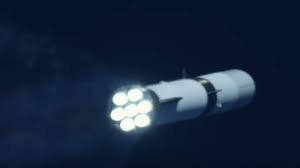 One of the most fascinating aspects of EscaPADE is its low-cost engineering approach. Built under NASA’s Small Innovative Missions for Planetary Exploration (SIMPLEx) program, the mission’s total price tag is a fraction of traditional Mars missions. Rather than depending on expensive standalone launches, EscaPADE hitched a ride as a secondary payload on a commercial rocket.
The NASA’s spacecraft rely on commercial satellite bus designs, modified for deep-space operations. Their communications, power systems and propulsion are optimized for efficiency rather than brute force performance. This approach reflects a growing trend in space exploration using private-sector advancements to reduce government costs and accelerate timelines.
Despite its modest scale, EscaPADE includes sophisticated scientific instruments. Each craft carries magnetometers, plasma analyzers and particle sensors capable of mapping the movement of charged particles around Mars. The idea is simple: measure how particles flow, collide and escape, and correlate this with solar wind activity.
This style of NASA’s mission may become increasingly common. As space agencies face budget pressures and multiple priorities, small missions that deliver focused science are becoming essential. EscaPADE is proof that a mission does not have to be massive to be meaningful.
The Two-Year Journey Ahead
Interplanetary missions are never quick. Even with advanced propulsion systems, spacecraft must follow energy-efficient routes that align with celestial mechanics. For EscaPADE, the cruise phase will last approximately two years, during which the twin spacecraft will adjust their trajectories and prepare for insertion into Martian orbit.
This period is not idle time. Mission engineers will monitor spacecraft health, run diagnostics, test instruments, and rehearse critical maneuvers. Deep space is an unforgiving environment, and even small anomalies must be addressed early to ensure success once the mission reaches Mars.
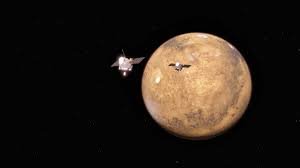
The team will also begin refining the orbital strategy. The two spacecraft must enter complementary orbits around Mars to create the dual-point observing setup that is central to the mission’s design. Achieving this requires careful sequencing of propulsion burns, solar power management and communication windows.
When they finally reach Mars and settle into orbit, the real science begins. For at least one year, the craft will track plasma behavior, solar wind variability and atmospheric escape rates. This detailed mapping will help answer questions that have lingered for decades.
Why Understanding Mars’ Atmosphere Matters
Mars is often viewed as a potential second home for humanity. But this dream can only become reality if we understand how the planet lost its ability to support surface water and a thicker atmosphere. If Mars underwent atmospheric collapse once, what is stopping it from happening again? Can the process be reversed or mitigated? And what does that mean for potential future terraforming or long-term human settlement?
Studying atmospheric escape also helps build accurate climate models. Earth’s magnetic field protects it from the solar wind. Mars, with its weak and patchy magnetic field, does not have that luxury. As a result, charged particles strip away atmospheric molecules continually. It is a slow but steady erosion that has shaped Mars’ evolution.
EscaPADE will study this erosion by mapping how plasma moves along different regions of Mars’ magnetic landscape. It will analyze how solar storms intensify escape processes. It will determine how seasonal variations affect atmospheric density and ionization levels.
These insights will help scientists reconstruct the planet’s climate history. They will also help engineers design future human habitats capable of withstanding radiation exposure and atmospheric instability.
Building Upon Past Missions
EscaPADE does not start from scratch. It follows campaigns by NASA, ESA and other agencies to study Mars’ atmosphere and magnetic environment. Missions such as MAVEN, Mars Express and Trace Gas Orbiter have already revealed important clues about how Mars interacts with the solar wind.
But EscaPADE adds a new dimension: simultaneous two-point measurements. Instead of one spacecraft observing from a single location, EscaPADE’s twin design means two crafts can observe the same event like a solar flare at different distances and different angles. This multi-point approach is crucial for understanding how localized or widespread atmospheric escape actually is.
It is similar to how weather forecasting on Earth improved dramatically once satellites began observing storms from multiple positions. With Mars, this kind of dual viewpoint has never been attempted at this scale.
The Scientific Questions EscaPADE Wants to Answer
Although the NASA’s mission has broader implications, its primary science goals are sharply defined. These include:
-
Understanding how energy from the solar wind transfers into the Martian atmosphere.
-
Measuring how that energy accelerates ions and causes atmospheric loss.
-
Distinguishing the roles of magnetic fields, solar storms and seasonal changes.
-
Mapping how plasma environments evolve over time and altitude.
Answering these questions requires precision, coordination and multiple vantage points all of which EscaPADE is designed to provide.
The Bigger Picture: A New Era of Modular Mars Science
 One of the most important outcomes of EscaPADE may not be scientific data of NASA but the proof of a new technological model. If successful, it will show that small, modular, cost-effective spacecraft can perform targeted science at other planets.
This model could enable future missions such as:
-
Fleets of small atmospheric probes
-
Coordinated orbiter-rover networks
-
Swarms of mini-landers
-
Distributed sensor systems mapping an entire planet simultaneously
Rather than investing billions into a single large spacecraft, agencies could launch multiple smaller ones, each specializing in one area. This approach reduces risk, increases flexibility and allows rapid innovation.
For Mars exploration, this new philosophy could revolutionize how humanity studies the planet.
The Road Ahead
As EscaPADE begins its long journey, the excitement within the scientific community is justified. The mission embodies the transition into a new era: more affordable, agile and cooperative planetary exploration. It also arrives at a time when interest in Mars is higher than ever, with plans for crewed missions in the coming decades, ongoing rover missions and a growing global push toward deep-space research.
The success of EscaPADE will not be measured only by whether it reaches Mars safely, but by the depth of the insights it brings. Every chart of plasma density, every reading of magnetic variation, every observation of solar activity will help complete the picture of a planet that once resembled Earth more closely than many realize.
Mars may look barren today, but its story is still being written. And small missions like EscaPADE ensure that we do not miss the subtle clues that will help decode its dramatic transformation.
The launch of NASA’s EscaPADE mission of NASA is a milestone for both planetary science and the future of interplanetary exploration strategy. Over the next two years, Blue and Gold will traverse deep space, preparing to map processes that have shaped Mars for billions of years. Their success will deepen our understanding of atmospheric escape, refine climate models of rocky planets and contribute to humanity’s broader vision of exploring and possibly one day settling the Red Planet.
The NASA’s mission is small in size but ambitious in purpose, EscaPADE is a reminder that innovation often comes not from scaling up, but from rethinking how we explore. The NASA’s mission journey has just begun, and the discoveries ahead may redefine what we know about the worlds beyond our own. To know more update about NASA’s mission subscribe Jatininfo.in now.