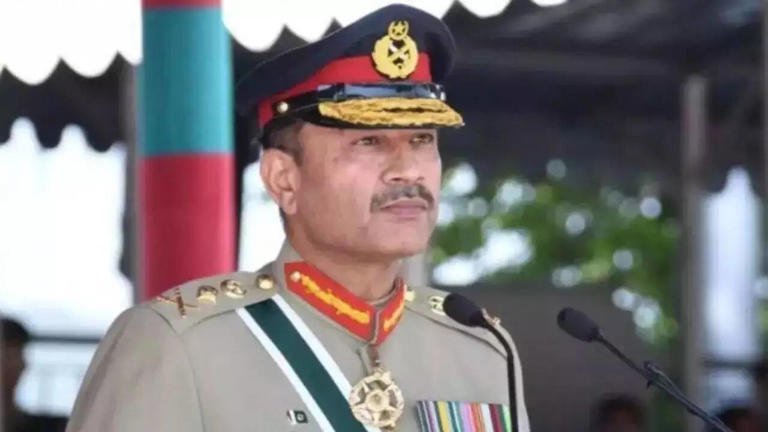
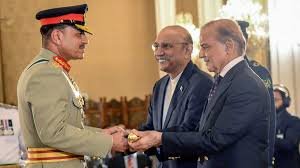
In Pakistan’s power structure, the military has always held a unique and often dominant position. Decisions taken in Rawalpindi frequently ripple into Islamabad and shape the country’s politics, diplomacy, and even its economic trajectory. But on Thursday, something happened that added an entirely new layer to this long-running story of power and institutions. President Asif Ali Zardari officially approved the appointment of Field Marshal Asim Munir as Pakistan’s first-ever Chief of Defence Forces, marking a shift that could redefine how the armed forces operate both internally and in relation to the civilian government.
This new role, carved out right at the peak of Pakistan’s defence hierarchy, is being seen as one of the most consequential structural changes in decades. And the man chosen to inaugurate this office is someone who has already been central to Pakistan’s security and strategic direction.
A New Post- But Why Now?
Before now, Pakistan didn’t have a “chief of defence forces.” The Chairman Joint Chiefs of Staff Committee (CJCSC) was the highest coordination post, but it didn’t hold the same consolidated authority that this new role now brings. The timing of this decision is what makes it so interesting.
Pakistan is going through a period of intense internal strain political instability, a severe economic crunch, rising threats along its borders, and prolonged tensions with militant outfits in the northwest. At the same time, its relationships with major global powers, particularly the US and China, are in delicate balance.
In such an environment, creating a post that centralises long-term defence strategy under a single authority may be the government’s attempt to bring coherence to a fragmented security structure.
But let’s be honest: In Pakistan, nothing happens at the military level without deep calculations behind it. Elevating Asim Munir to this unprecedented office signals confidence, continuity, and perhaps a desire to institutionalise the influence that the military already holds.
Who Is Asim Munir, and Why Was He Chosen?
 People in Pakistan’s defence and political circles will tell you that Asim Munir has had one of the most interesting trajectories within the Pakistan Army. Quiet, methodical, and known for discipline more than flamboyance, Munir has always been regarded as a soldier who follows the rulebook but also understands the complexities of modern intelligence warfare.
Before becoming the Army Chief, he served as the head of both ISI (Inter-Services Intelligence) and MI (Military Intelligence). Very few officers in Pakistan’s history have held both positions. This gives him an unusually deep view of the country’s internal and external security challenges.
He’s considered someone who can be trusted with extremely sensitive information and long-term planning and when you’re creating a new top-level military post from scratch, that reputation becomes even more important.
Another factor that many commentators highlight: Munir’s relationship with the current government, particularly with President Zardari, is based less on political favour and more on institutional confidence. In Pakistan, that matters a lot.
Five Years at the Top
The fact that Munir has been appointed for five full years is noteworthy. In Pakistan, tenures rarely run their full course without turbulence. But a fixed five-year term gives Munir something no other military leader currently has time.
Time to reorganise Pakistan’s defence policy.
Time to strengthen coordination among the Army, Navy, and Air Force.
Time to shape Pakistan’s regional posture, especially when relations with India, Afghanistan, and Iran remain tense.
It also gives time for longer-term restructuring something Pakistan’s defence establishment has discussed for decades but never fully implemented.
Will This Reduce the Army’s Political Interference
This is the question people are quietly asking. On paper, creating a “Chief of Defence Forces” sounds like a step toward modernising Pakistan’s defence organisation. Many countries including the US, UK, and India have a similar structure to improve coordination among military branches.
But Pakistan is different. Its military has historically wielded power well beyond barracks and battlefields.
Some analysts think this move could expand the institutional reach of the military even more, giving one office more consolidated influence. Others argue that this new role could actually streamline responsibilities and reduce the need for the army chief to get involved in civilian matters.
Right now, it’s too early to tell.
But what’s certain is that this move strengthens Asim Munir’s standing significantly.
Munir’s Current Influence and What Might Expand Further
Since becoming Army Chief, Munir has already been visible in decisions involving security, economic planning, border management, and even political stability. His tenure has been marked by attempts to stabilise a politically chaotic landscape, especially after the events of May 2023.
With this new title:
-
He gains wider authority across all three military services.
-
He becomes the central figure for national-security doctrine.
-
He may have more say in Pakistan’s long-term defence procurement.
-
He could shape the future of Pakistan’s counter-terror strategy.
And yes, whether Pakistanis like it or not, this will influence politics.
Why This Matters for Pakistan’s Neighbours, Especially India
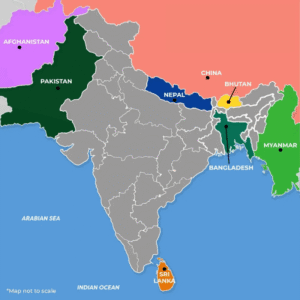
Decisions taken in Pakistan’s defence circles don’t remain confined within its borders. India, Afghanistan, and Iran are all watching this development closely.
 For India:
Munir has maintained a firm stance on issues related to Kashmir and border violations. His elevation to a stronger role means New Delhi may need to adjust its reading of Pakistan’s military signals. Stability at the India-Pakistan border has always depended heavily on who leads the Pakistani military.
For Afghanistan:
Pakistan’s western border remains volatile. With the Taliban maintaining a complicated relationship with Islamabad and TTP (Tehrik-i-Taliban Pakistan) attacks increasing, Munir’s enhanced role could lead to new security strategies.
For China:
CPEC (China–Pakistan Economic Corridor) security is a major concern for Beijing. Munir has already been proactive in this area, and with broader authority, China will expect more stability for its investments.
How Pakistan’s Political Class Is Reacting
Interestingly, political reactions have been subdued and perhaps intentionally so. Most leaders recognise that opposing a move of this scale publicly could spark friction with the military, something no party wants at the moment.
Some sections of Pakistan’s civil society, however, fear that this change might further limit the space for democratic autonomy. Others believe it might bring more predictable governance, especially during crises.
But average Pakistanis seem to view this appointment with caution. Many are asking: “Will anything actually change for the common citizen?”
That’s the bigger question one that will take time to answer.
What Happens Next?
The coming months will show how much actual power this new post carries. Will it reshape Pakistan’s security institutions? Will it become the nucleus of decision-making beyond the traditional army chief’s role? Or will it simply formalise the influence the military already had? Asim Munir now stands at the centre of these possibilities.
One thing is clear:
This appointment is more than a routine administrative decision it’s a signal that Pakistan’s military structure is entering a new phase, and the country’s political and strategic environment may shift accordingly. And because Munir has five full years to steer this institution, we are likely to see a more defined model of military decision-making than Pakistan has witnessed in decades. To know more subscribe Jatininfo.in now.