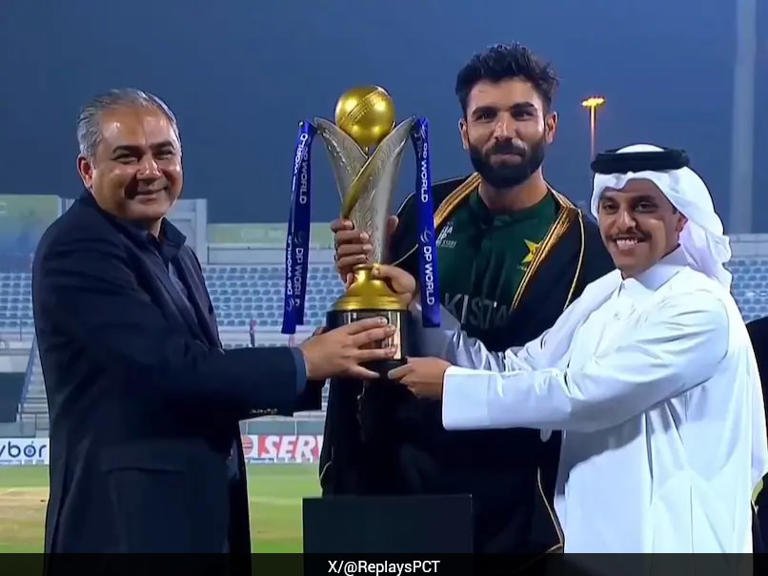
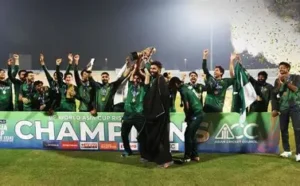
Sometimes, a single handshake or a trophy presentation reveals more about the politics of sport than months of official statements. That’s exactly what happened when Asian Cricket Council (ACC) chief and PCB chairman Mohsin Naqvi, smiling widely, handed over the Asia Cup Rising Stars Trophy to the Pakistan Shaheens after their nail-biting win over Bangladesh A.
It wasn’t just about young cricketers celebrating their first big international developmental title it was a moment of redemption for Naqvi himself. After months of controversy over the senior Asia Cup trophy handover earlier this year, he finally completed a ceremony that ended with smiles instead of confrontations.
This blog dives deep into:
-
What happened in the Rising Stars final
-
Why Mohsin Naqvi’s reaction matters
-
How the senior Asia Cup feud still casts a shadow
-
What this incident says about India–Pakistan cricket politics
-
Why sport rarely escapes diplomacy in South Asia
A Trophy, A Smile, and a Return to Normalcy
At the ceremony, Naqvi looked nothing like the tense administrator who had sparred with the BCCI earlier. He shook hands, posed with the players, and lifted the trophy alongside the Pakistan Shaheens with almost paternal pride. This wasn’t a routine protocol moment. It was a symbolic full circle. Earlier in the year, Naqvi had faced a humiliating situation: the senior Indian team refused to accept the Asia Cup trophy from him after winning the final. That refusal led to Naqvi cutting the presentation short removing the medals and trophy from the stage and walking away.
Critics called it “immature,”
supporters called it “self-respect,”
and commentators called it “a disaster in sports diplomacy.”
For an administrator whose political and cricketing career has thrived on symbolism, that incident stung. The Rising Stars ceremony was therefore his chance to restore a shattered ritual: an administrator awarding champions. The handshake with Pakistan’s youth players smiling, grateful, carefree was more than a photo-op.
It was the first time in months Naqvi could publicly complete a ceremony without conflict.
A Final That Deserved the Spotlight
The match itself had drama worthy of an India Pakistan rivalry. But instead, it was Bangladesh A vs. Pakistan Shaheens, two developmental sides young squads built to test the next generation of talent.
Bangladesh A sets a modest total
Bangladesh A scored 125 runs in their allotted overs.
It wasn’t spectacular, but the bowling attack was sharp, and the pitch demanded patience.
What came next was a lesson the Pakistan cricket system knows intimately: nothing is guaranteed until the last ball.
Pakistan stumble, regroup, and claw back
 Despite chasing a relatively small target, Pakistan slipped into old habits:
-
Middle-order collapses
-
Rash shots
-
Overconfidence turning into panic
Yet the youngsters held their nerve and managed to match Bangladesh’s total, forcing a tie after 40 overs. At this point, the crowd wasn’t thinking about Naqvi, ACC controversies, or trophy politics. They were seeing cricket at its purest adrenaline mixed with uncertainty.
The Super Over
Pakistan needed 7 runs, and they chased it down in just four balls, without losing a wicket.
No theatrics, no meltdown just controlled aggression.
It was the kind of micro-moment that strengthens dressing rooms and builds careers.
Why Everyone Noticed the Ceremony
When the final ended, Naqvi walked to the presentation area with the trophy confident, calm, and visibly relieved.
For casual fans, it was a sweet moment of celebration.
But those who had followed Asian cricket politics instantly understood the subtext:
-
Naqvi, receiving applause instead of criticism.
-
A Pakistani team, not India, accepting a trophy from him proudly.
-
A ceremony that played out to completion.
The smile wasn’t just joy it was vindication. For Naqvi, handing that trophy to a Pakistani side was a controlled, symbolic win.
The Ghost of the Senior Asia Cup
To understand why this moment mattered, we must revisit the September Asia Cup final, arguably one of the strangest awarding ceremonies in modern cricket.
India won the tournament under Suryakumar Yadav. Naqvi, as ACC President, prepared to present the trophy. But in a move that shocked ACC officials:
The Indian players declined to take the trophy from him.
They stood together, stiff and cold, refusing the handshake. The message intended or not was unmistakable:
“We do not acknowledge this administrator.”
That moment spread across social media like wildfire. Memes, mockery, and speculations filled the feeds:
-
Was it a political snub?
-
Was it a player protest?
-
Was it subtle retaliation for earlier boardroom battles?
Under pressure, Naqvi removed the trophies and medals from the stage.
The ceremony ended awkwardly, with no grandeur and no symbolism.
Where Is The Senior Asia Cup Trophy Now?
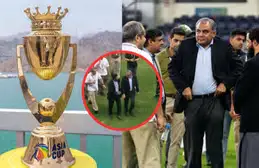 This is the strangest twist: the senior Asia Cup trophy is still physically in Naqvi’s custody.
Reports suggest:
-
It remains stored at ACC headquarters in Dubai.
-
Naqvi offered Indian players the option to visit him personally to collect it.
-
He even proposed a formal handover ceremony.
-
The BCCI rejected these conditions multiple times.
During ICC Board meetings in Dubai (November 2025), the BCCI raised the matter again, formally and informally. Naqvi appeared willing to resolve it but nothing concrete has followed.
So:
-
India won the trophy.
-
India never received it.
-
Naqvi still holds it.
-
Both sides refuse to back down.
It’s almost cinematic: A trophy caught between sports politics and national pride.
The Rivalry Underneath: Not Just Sport, But Control
India and Pakistan do not simply compete on cricket fields; they compete on narratives.
For India:
-
Winning trophies is routine.
-
Administrators exist to hand them over quietly.
-
Cricket boards operate like corporations.
For Pakistan:
-
Cricket is identity.
-
Administrators are personalities.
-
Every victory is an assertion of resilience.
Mohsin Naqvi embodies that Pakistani model:
-
He is expressive.
-
He sees symbolism everywhere.
-
He treats trophies like political statements.
India, meanwhile, prefers silence and process. When Indian players refused the trophy from Naqvi, the message was indirect but sharp: “We don’t play your theater.”
What the Rising Stars Ceremony Says About Naqvi
The handover at the Rising Stars final revealed four things about him:
1. He wants to be seen as accessible
Naqvi smiled constantly, posed with players, shook hands, and avoided confrontation.
2. He understands optics
Every camera angle framed him with the winners. This was deliberate: reassurance of authority.
3. He cares about perception
After the September humiliation, he needed a ceremony that ended with applause.
4. He is building a narrative
“Under my leadership, Pakistani cricket flourishes.”
This is not vanity it is strategy.
The Bigger Question: When Will India Get Their Trophy?
Fans ask this constantly, and the absurdity grows each month. Cricket historians are already joking:
The first title India won and never held.
BCCI insiders don’t want a grand ceremony. They want a courier delivery. A handover without drama. Naqvi wants the opposite:
-
A stage,
-
A moment,
-
A handshake,
-
A photo.
Neither side is budging. The trophy sits in Dubai, a hostage of ego.
Why This Matters Beyond Symbolism
Sports administration is not a sideshow. It affects:
-
Tournament locations,
-
Player travel,
-
Scheduling rights,
-
Umpiring panels,
-
Broadcasting deals.
India is the financial gravity of world cricket. Pakistan is the romantic heartbeat of South Asian cricket. They need each other and they resent needing each other.
Every clash between their boards reminds the world that cricket is:
-
Diplomacy with helmets,
-
History wearing pads,
-
Politics disguised as bat and ball.
The Young Pakistan Team Deserves Their Spotlight
Lost in the administrative theatre is the most important fact:
Pakistan Shaheens won because of grit, calmness, and courage.
They:
-
Bowled with discipline,
-
Fielded with intent,
-
Recovered from a shaky chase,
-
Devoured their Super Over target without panic.
These are future national-team hopefuls players who will carry the crest long after bureaucrats fade from press rooms.
They deserved a normal ceremony. They got one.
Mohsin Naqvi’s wide smile wasn’t accidental. It was relief, vindication, and quiet defiance. He finally completed a trophy handover without politics strangling the moment. Yet the shadow of the unresolved senior Asia Cup still lingers like an awkward silence everyone pretends not to hear.
Until the trophy is in India’s hands, the feud lives on:
-
One administrator’s refusal to be sidelined,
-
One cricket board’s refusal to be lectured.
The Rising Stars win gave fans a reason to celebrate. But the unclaimed trophy in Dubai remains the true symbol of this rivalry:
a reminder that in South Asian cricket, nothing is ever just about the game. To know more subscribe Jatininfo.in now.