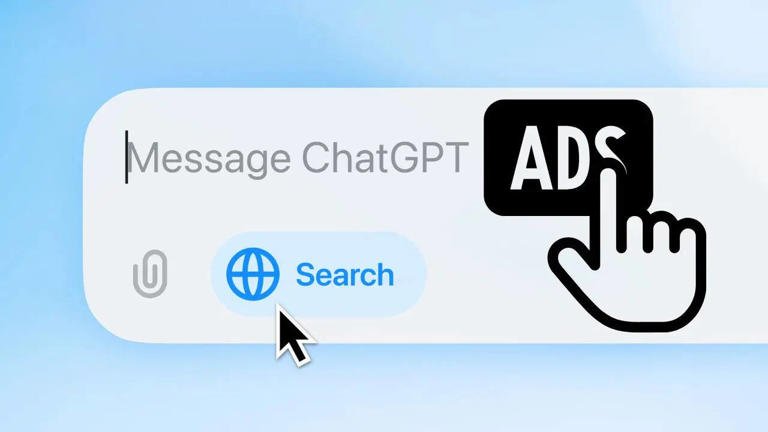
For years, one silent promise sat behind every ChatGPT conversation no ads, no banners, no pop-ups, nothing breaking the flow. You typed your prompt, the model answered, and that was that. But 2025 is shaping up to be a turning point. Multiple industry insiders, leaked internal discussions, and early hints from OpenAI indicate one big shift: ChatGPT might start showing ads very soon.
If this happens, it won’t just affect the experience of millions of users. It could reshape the AI industry, spark debates about ethics, privacy, and influence, and even define how AI tools sustain themselves financially.
Let’s break down everything why OpenAI might be doing this, how ads inside an AI chatbot would even work, and what this means for regular users, creators, brands, and the future of AI.
Why Would ChatGPT Need to Show Ads?
 This is the first question everyone asks. Why would one of the fastest-growing tech products in history suddenly need advertisements? After all, ChatGPT became a global phenomenon without them. Here’s the truth: running a massive AI model costs a ridiculous amount of money.
Every message you send sparks a chain reaction:
-
expensive GPUs
-
enormous real-time computation
-
storage and memory pipelines
-
constant model updates
-
safety layers
-
monitoring
-
fine-tuning and scaling costs
-
infrastructure for billions of queries per month
Even with paid plans like ChatGPT Plus and Team, the economics don’t fully balance out. And now that OpenAI is integrating voice, images, agents, and browsing the cost per user is increasing even more. So introducing ads, at least in some form, is an obvious business decision. It’s not about greed it’s about sustainability.
What Kind of Ads Are We Talking About?
If you’re imagining some random banner ad popping up like old websites from the early 2000s, relax. That’s not what’s coming.
Based on hints from OpenAI and how other AI companies are experimenting, the ads inside ChatGPT are likely to be:
1. Contextual Ads
These ads appear depending on your query.
Example:
You ask for “best affordable laptops under ₹50,000.” ChatGPT might give recommendations, and then show a sponsored suggestion from a brand.
2. Sponsored Answers
A brand could pay to appear as one of the options in a list generated by ChatGPT clearly labelled, not hidden.
3. Subtle Visual Prompts
Maybe a card, a small box, or a highlighted section underneath the main response.
4. “Recommended Tools” in agent workflows
As ChatGPT becomes more agentic (doing tasks, running workflows, browsing), it may suggest certain apps or services — some paid placements.
5. API-Level Ads
If developers integrate ChatGPT into their apps, sponsored results might appear there too. None of this is official yet, but these formats align with what AI companies are testing globally.
Why This Move Is Drawing Attention And Scrutiny
Introducing ads isn’t a small update. It changes the relationship between users and AI. AI chatbots aren’t like social media. They don’t show you a feed; they generate answers. And that’s where concerns enter the picture.
1. Influence Through Answers
If AI suggests a product, a service, or a company even with a small “sponsored” label it carries more authority than a regular ad. That’s because users trust ChatGPT like an advisor, not a billboard.
2. Risk of Bias
Ads could subtly skew recommendations.
Example:
Instead of “best budgeting apps,” you might get “sponsored budgeting tools first.” This creates an ethical dilemma. AI should respond neutrally but sponsorship introduces an incentive.
3. Transparency Issues
Users need to know:
-
how ads are chosen
-
what data influences them
-
whether their queries are used to target ads
If this isn’t crystal-clear, people will push back.
4. Safety Risks
Misleading ads in a conversational interface could be dangerous.
Imagine if:
-
a fake crypto platform bought placement
-
a scam loan service paid for visibility
-
a low-quality healthcare app got recommended
OpenAI will need extremely strict filters to avoid this.
Will Paying Users See Ads?
This is where things get interesting. At the moment, OpenAI hasn’t confirmed anything. But early internal leaks suggest a possible structure:
-
Free users: ads will be shown
-
Plus users: probably fewer or no ads
-
Enterprise/Team users: no ads at all
This is the same structure used by platforms like Spotify and YouTube you either pay with money or pay with exposure. There’s also a chance OpenAI introduces a new “ad-free” tier in the future if ads become widespread.
How Users Might React
But the response won’t be the same for everyone.
1. Free users
Some might not care. After all, free users expect limitations. Others may feel annoyed, especially if the ads interrupt the flow of answers.
2. Paid users
If OpenAI keeps ads away from paid plans, subscribers will feel like they’re getting more value for their money.
3. Critics
AI researchers and privacy experts will definitely question the ethics of sponsored answers inside a highly trusted model. They will demand transparency.
4. Businesses
Brands will love this, because it gives them a new advertising channel with extremely high conversion potential.
What Ads Inside ChatGPT Could Mean for the Future of AI
This move goes beyond simply adding sponsored content. It could spark a bigger shift.
1. The Rise of AI-Powered Ad Markets
Google and Meta dominate digital ads. But ChatGPT has direct access to intent not just search queries. If ads work well here, a new industry might appear overnight: AI-first advertising.
2. New Revenue Models
Right now, AI companies depend on:
-
subscriptions
-
enterprise deals
-
API usage
Ads introduce a fourth, extremely scalable source of revenue.
3. Competition Pressure
If ChatGPT integrates ads successfully, other AI companies — Anthropic, Google Gemini, Meta AI — will likely test similar features.
4. Different AI Experiences for Different Users
Paid: clean, private, ad-free
Free: ads, limited access, slower responses
This may widen the usage gap between casual and professional users.
5. AI Becomes More “Platform-Like”
Ads turn ChatGPT from being just a tool into an ecosystem almost like a hybrid of Google Search and a personal assistant.
Will Ads Change the Way ChatGPT Responds?
This is the part users worry about most. The simple fear is:
“What if the AI stops being neutral?”
OpenAI will need to balance:
-
commercial interests
-
accuracy
-
fairness
-
trust
-
safety
If the model prioritizes ads over truth even slightly users will feel it immediately. So OpenAI will likely:
-
label ads clearly
-
add disclaimers
-
restrict sponsored responses in sensitive topics like health, politics, finance, safety
-
maintain strict separation between ads and core model generations
Whether this works depends on execution.
The Business Reason Behind All This
 The AI race is expensive more than any tech shift in decades. Companies are burning billions annually on compute, research, and infrastructure.
Ads could be a way for OpenAI to:
-
stabilize long-term revenue
-
reduce reliance on investor funding
-
lower subscription costs
-
expand free access
-
compete with Google’s Search Ads empire
If ChatGPT becomes a major advertising platform, it could challenge Google’s dominance for the first time in two decades.
That’s huge. It depends on how it’s implemented.
Good if:
-
ads are subtle
-
ads are clearly labelled
-
no personal data is misused
-
free access improves
-
paid users stay ad-free
Bad if:
-
ads appear inside core answers
-
bias starts to creep in
-
transparency is weak
-
spammy or scammy brands slip through
The impact could swing either way.
The AI World Is Entering a New Chapter
Whether we like it or not, AI tools are growing up. Free services eventually need revenue. And the moment ChatGPT puts ads into conversations, it will officially join the ranks of large digital platforms that survive on advertising income. But this shift isn’t just about money. It will redefine:
-
how information appears
-
how brands reach people
-
how AI influences decisions
-
how users trust AI systems
We’re watching the early stages of a transformation that will shape the next decade of technology. ChatGPT showing ads isn’t just a “feature update.” It’s the beginning of a new model of how AI fits into our daily lives as a tool, a platform, and maybe even an economy of its own. To know more subscribe Jatininfo.in now.