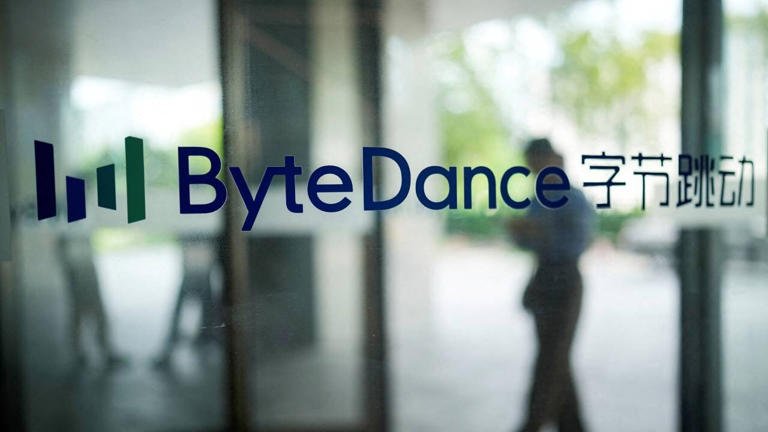
Artificial intelligence has been creeping into our daily lives for years, but every now and then, a sudden leap makes people stop and ask, “Wait… are we really ready for this?” One such moment arrived recently in China, when ByteDance the company behind TikTok quietly introduced a smartphone prototype that could operate almost like a miniature digital human. It didn’t just respond to questions or fetch information. It saw your screen. It tapped your apps. It typed messages. It made calls. It could even book you a ticket while you did absolutely nothing.
The device, built in collaboration with ZTE’s Nubia brand and nicknamed the Nubia M153, was powered by ByteDance’s in-house agentic AI system called Doubao a model capable of understanding tasks, navigating interfaces, and completing multi-step actions without supervision. For a brief moment, it felt like the next era of smartphones had arrived. And then, almost as quickly as it appeared, the company pulled back.
What happened? Why did the excitement turn into alarm? And what does this reveal about the future of AI-powered phones?
A Phone That Behaves Like a Person
The phrase “AI phone” usually refers to a regular device running smarter software maybe a better camera engine, voice assistant, or prediction algorithm. But ByteDance had something much more ambitious in mind. Their Doubao-powered prototype wasn’t built to “assist”. It was built to act.
During early demos released online, viewers watched the AI do things that normally only a human could do. It didn’t need a fixed command like “open messages” or “play music.” Instead, you could give it a goal for instance, “book me a train ticket” and the AI figured out the steps on its own. Open app. Scroll page. Choose train. Fill details. Confirm booking. All done through the same touch interface you would use yourself. This wasn’t Siri pressing buttons through APIs. This was an AI literally using your phone. Some tech analysts called it the most “agentic” consumer AI ever shown publicly. Others said it was the closest thing yet to a true “phone co-pilot.” And to be fair, the potential was huge. Imagine a device that handled boring chores bill payments, ticket bookings, reminders, reservations entirely on autopilot.
For an everyday user, it would be like having an invisible personal assistant living inside your phone. But with great power comes great… well, terror.
Then Came the Privacy Panic
 The moment the demos spread online, people around the world reacted with a mix of fascination and fear. If an AI can see everything on your screen, what happens to:
-
your private chats,
-
your bank statements,
-
your passwords,
-
your saved cards,
-
your photos
-
and your personal browsing history?
Giving an artificial system that much visibility and control felt like handing over your digital identity. You wouldn’t just trust it with one task; you’d be trusting it with everything inside your device.
That triggered a wave of concern.
Many argued that:
-
A human-like AI agent isn’t inherently unsafe, but
-
A human-like AI agent embedded inside a commercial phone absolutely is, unless guarded by airtight privacy frameworks.
Reports then emerged that ByteDance had restrained the AI’s powers. Sensitive controls were limited. Autonomous actions were scaled back. Full-system access was temporarily locked behind stricter internal guidelines. No official statement admitted to an “issue,” but the sudden retreat said enough. The company had walked right into the most sensitive debate in modern tech:
How much control should AI have over personal devices?
Why ByteDance’s Experiment Feels Like a Warning Shot
The incident did more than raise eyebrows. It showed that companies are stepping into a new frontier where AI doesn’t just assist it acts.
Consider how different this is from existing tools:
► Siri
Mostly executes simple commands and struggles with multi-step tasks.
► Alexa
Great for connected home devices but limited to voice-triggered actions.
► Google Assistant
Smart, but still bound by app permissions and APIs.
► Doubao on the M153 prototype
Could theoretically control your entire phone just by watching the screen.
This shift from “helper AI” to “agent AI” is the moment researchers have been predicting where AI becomes capable of doing jobs, not just answering questions. But ByteDance’s experiment delivered the flip side If an AI can operate your phone like a human, it can also misuse it like one. That dual nature is exactly why the company tapped the brakes.
A Global Race for the Ultimate Phone Assistant
 What ByteDance attempted isn’t happening in isolation. All major tech companies are inching toward the same vision AI agents that can take meaningful action.
OpenAI
Recently rolled out its Shopping Research tool, which evaluates and compares products visually. It’s a step towards multimodal agents that can browse, decide, and recommend with context.
Apple
Is preparing a major Siri overhaul in 2026, teaming up with Alibaba for China-specific capabilities. Apple’s delay seems intentional they prefer safety-first innovation, especially after seeing the backlash around ByteDance’s demo.
Has quietly been testing deeper Assistant integrations within Android, hinting at eventual agent-like behavior.
And now ByteDance
Accidentally accelerated the conversation by showing what happens when you go too far, too fast. In a way, the Nubia M153 prototype became the first visible marker of a future that’s both inevitable and discomforting.
Do Users Actually Want an Agentic Phone?
If the idea of a phone that runs itself makes you uneasy, you’re not alone. Most people want convenience, not surveillance. They like automation, but not at the cost of control. However, here’s the twist many users do want a phone that saves them time, reduces digital clutter, and handles micro-tasks automatically. But they want it without feeling watched. This is the fundamental tension AI developers must solve:
How do you build an AI that acts like a human assistant
without making users feel like a human is watching everything they do?
Until that is addressed, agentic phones will remain prototypes instead of mainstream products.
What Happens Next
ByteDance hasn’t abandoned the idea. Reports suggest the company is exploring:
-
stricter privacy sandboxes,
-
differentiated permission layers,
-
user-confirmation steps for sensitive tasks,
-
and device-level isolation for AI interactions.
When or if the feature returns to commercial devices in China, it will be heavily restricted compared to what was shown initially.
But the genie is out of the bottle. The world has now seen what an AI phone can actually do.
A Glimpse Into Tomorrow
The Nubia M153 story isn’t about one device. It’s about a shift happening across the tech industry. AI agents that can think, see, and act are no longer theoretical they’re already here, even if still under wraps. ByteDance simply revealed their potential earlier than expected. And even though the prototype triggered concerns, it also sparked curiosity. Because deep down, many people want a world where their phone takes care of repetitive digital chores so they can focus on real life.
But before that world arrives, tech companies will have to answer one crucial question:
How do you make an AI powerful enough to control your phone
without making you feel like you’re losing control of your phone?
That’s the problem ByteDance stumbled into and the challenge the entire tech industry must now solve. To know more subscribe Jatininfo.in now.