
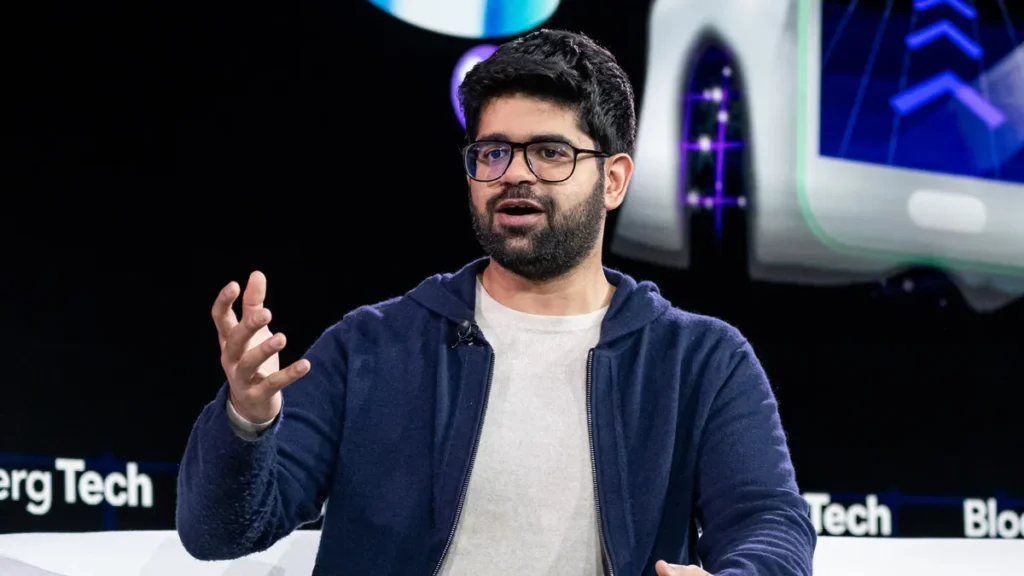
In a world where start-ups aspire to perfection, lightning speed and constant growth, the voice of fresh leadership sometimes offers a surprising message: perhaps what you most need is not to fix everything, but to accept you cannot fix everything. That is precisely what Aravind Srinivas, co-founder and CEO of Perplexity AI, has been telling ambitious leaders. At a recent talk at UC Berkeley Haas, Srinivas laid out what he views as the defining skill for any CEO or founder: the ability to prioritise ruthlessly, to select the one thing that really matters and to make peace with the fact that everything else will always remain unresolved for a while.
It’s a counter-intuitive message. In an industry obsessed with “move fast and break things”, growth at all costs and disruption for the sake of disruption, Srinivas invites a moment of reflection. He argues that deciding which single problem to focus on and letting go of dozens of others is the skill that separates leaders who scale from those who sputter.
Let’s unpack how he came to that conclusion, how it plays out in practice at Perplexity AI, and why this lesson matters for any leader whether you are running a seven-person tech startup or a multinational company of thousands.
The Journey That Shaped His Perspective
Aravind Srinivas studied computer science, held roles at DeepMind and OpenAI, and earned his PhD at Berkeley before co-founding Perplexity in 2022. From the start, his aim was bold: build a next-generation “answer engine” that could handle natural-language queries far more effectively than legacy search tools. The company has quickly grown, launching its browser product and carving its niche in the AI-search space.
As the leader of a fast-moving organisation, Srinivas has had to learn the art of living with uncertainty. In his own words: “I used to think every problem just needed to be fixed instantly. As the company has scaled, I have learned to make peace with some problems just existing.
That admission might sound like defeat but in his framing, it is liberation. Because when everything demands attention, nothing really receives it. Prioritisation becomes the lens through which a CEO filters chaos into direction.
The One Thing You Can Control
One of the core ideas Srinivas emphasises is that most executives run around with five or ten problems on their mind simultaneously. If you ask them what the one thing is that they should be prioritising right now, many cannot answer. “The number one skill you need as a CEO is to always know what the top priority is,” he says.
Why does this matter so much in the AI world he inhabits? Because the pace of change is blistering. Models shift, regulations evolve, talent is scarce, competition lurks. To survive and thrive, a company must focus on one problem at a time understanding that solving everything at once is impossible.
At Perplexity, he explains, that means releasing a product when it is about 80% complete usable, meaningful and timely rather than waiting for perfection. Then iterate. “Six months from now, that 80/20 moves to 90/10, and 12 months later it’s 95/5,” he said.
By doing so, Perplexity gains two advantages: speed to market, and learning from live usage. This shifts the emphasis away from “build once and pray” to “launch fast, refine continuously”. For Srinivas, this is the operative form of focus: pick the highest-leverage problem, release an answer, then move on to the next.
Making Peace with Unresolved Issues
Here’s one of the rarer leadership lessons: there will always be problems you cannot fix right away. Some systems are too degraded. Some teams too stretched. Some markets too uncertain. And if you treat every unresolved issue as a crisis, you risk burnout, paralysis and distraction.
Srinivas explains it plainly: the moment you accept that some problems will just live on your to-do list is the moment you free yourself to lead. Fixing everything obsessively can become a trap. Better to ask: What truly must be fixed now?
This doesn’t mean ignoring issues or abandoning standards. It means building judgement. It means recognising that resources attention, energy, money are finite. And it means focusing on the problem that, if solved, will create the most forward momentum.
Leadership in Practice: How This Looks at Perplexity AI
 In his talk, Srinivas described how he leads meetings, product decisions, and fundraising with this mindset. Instead of pitching with a deck, he often prefers to open a memo and allow a long Q&A. He wants transparency, speed and minimal decoration.
He also underscores culture. He wants his team to ask questions, not just deliver answers. Meetings start with “what question does this solve?” rather than “here’s what we’re planning”. In a fast-moving field like AI, having the right question is often more valuable than having the right answer today.
Srinivas also emphasises personal habits. The CEO of a fast-growing AI firm still says there are hundreds of messages every morning telling him “this sucks” or “this feature is broken”. Instead of being deflated, he says he treats this as data. It tells him: we are not perfect yet good. That attitude undergirds the broader message: constant improvement, not endless perfection.
Why This Skill Matters for CEOs Everywhere
Although Srinivas comes from the AI startup world, his lesson has broader relevance. In any organisation undergoing change whether a tech firm, non-profit, university or public institution the CEO faces chaos, competing demands and rapid uncertainty. The ability to pick one priority, act decisively, and live with the rest until their time comes is a leadership muscle worth developing.
Here are a few reasons why:
-
Information overload: CEOs are bombarded with data, requests, meetings. Prioritisation is the tool that filters the noise.
-
Resource constraints: You cannot scale all initiatives simultaneously. You must choose which to scale, now.
-
Strategic clarity: Teams follow clear objectives. If directives are scattered, execution weakens.
-
Organisational energy: Constant pivots drain morale. Focus lets a team feel momentum.
-
Adaptation to change: In volatile markets, you cannot wait for perfect certainty. You act with what is available.
In short: leadership is less about having all the answers, and more about choosing which question you will answer next.
Not the Only Skill, But the Foundational One
It’s worth noting that Srinivas doesn’t claim this skill replaces others. CEOs still need vision, empathy, domain knowledge, execution ability, communication skills and more. But he argues that without this foundational skill the ability to prioritise and accept imperfection the rest become much harder.
In his words: “The number one skill you need as a CEO or a founder is anytime you need to pick the number one thing… and just learn to let other problems stay there for a while.”
When companies are scaling fast hiring hundreds of people, launching new products, facing competition, navigating regulation the ability to frame the North Star and keep it in focus is what keeps you from scattering, burning out, or losing your way.
Implications for Aspiring Leaders
 If you’re a founder, executive or manager aiming to scale, here are some practical take-aways inspired by Srinivas:
-
Ask daily: “What is the one thing we must fix/launch/scale this week?”
-
Write a memo: Instead of dozens of slides, write a short narrative about the one objective ask for questions instead of presenting.
-
Release imperfectly: Aim for “80% complete” but usable. A waiting game for perfection often means your competitor moves first.
-
Create culture of questions: Encourage your team to ask “why” and “what problem?” rather than “what output?”
-
Build discipline: Accept that certain problems will remain but schedule review cycles to revisit the “leftovers”.
-
Communicate clearly: If you’ve prioritised one thing, align the team to it. Unclear priorities lead to confusion.
-
Stay resilient: Growth involves setbacks. Accept that failures, delays or unresolved glitches are part of the journey not a sign of doomed leadership.
What It Could Mean for Industry Leaders
In Srinivas’ view, the AI world moves fast so fast that leaders cannot wait for perfect solutions. Instead, they must launch, learn, iterate. The prioritisation mindset is key in technologies, but also translates into other sectors: healthcare, education, infrastructure, non-profits.
As devices, software and markets evolve, the CEO who can spot the one meaningful lever and pull it will likely build the enduring company. The rest will chase multiple shiny opportunities and fall behind.
Aravind Srinivas’ message may appear modest: “make peace with some problems existing”. But underneath that simplicity lies a powerful leadership insight. At its heart, leadership is not about controlling everything it’s about choosing what you will control, now, and having the courage to leave the rest on the sidelines, for the time being.
That clarity becomes the foundation for scale, resilience and focus. And in a world of complexity and change, perhaps that is the most important skill a CEO can have. To know more subscribe Jatininfo.in now.