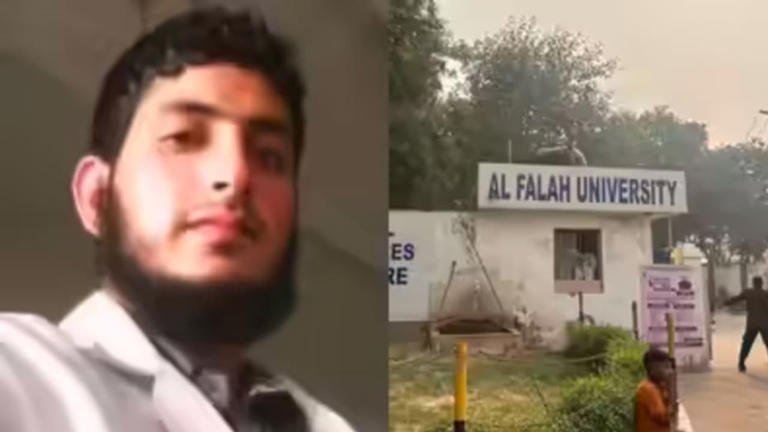
The evening after the deadly blast near Delhi’s Red Fort, another incident made headlines: the official website of Al-Falah University (Faridabad) was reportedly defaced by hackers who posted a warning message and took credit under the name “Indian Cyber Alliance.” The breach has added a volatile digital dimension to an already tense security situation, raising questions about vigilante cyber action, campus accountability, investigation timelines, and how institutions should respond when their online presence becomes a target.
Here’s a clear, human-written breakdown of the episode what we know, what is alleged, how officials responded, and why the hack matters beyond a single web page.
The sequence of events from the blast to the hack
Late on 10 November 2025, a powerful explosion near the Red Fort area in Delhi killed and injured civilians, prompting an emergency response and an intensive probe by central agencies. In the hours and days that followed, police reports and media coverage pointed investigators toward a wider network and several leads that touched institutions in the National Capital Region. As those allegations surfaced, the official website of Al-Falah University a private institution based in Faridabad that also runs a medical college and hospital was taken down briefly after being defaced with a politically charged warning. Local media first reported the hack and the message visible on the landing page.
Hackers posted phrases critical of what they described Al-Falah website as “radical activities,” and a number of outlets reported the defacement carried language calling out the Al-Falah university’s alleged links to persons under investigation. Several national news sites named the group claiming responsibility as the Indian Cyber Alliance; screenshots circulated on social platforms showing the phrase “HACKED BY INDIAN CYBER ALLIANCE” and other warning text. Administrators restored the site after the breach, and local cybercrime cells opened inquiries.
What the defacement said and why that matters
The messages left on the university homepage were designed to be provocative. Reports say the page displayed warnings against what the hackers called “radical universities” and urged alleged elements to leave Indian soil. Some versions of the screenshot also carried harsher language. Media coverage described the hack as a vigilante-style backlash to the law-enforcement action that followed the blast investigation. Whether the posted text aimed to intimidate, signal public anger, or pressure investigators is unclear but the immediate effect was to inflame public sentiment and place the university squarely in the headlines.
Why does this matter? Because website defacements are symbolic acts that can rapidly escalate communal emotions and create reputational damage far beyond the technical intrusion itself. The message’s tone and timing coming amid a sensitive criminal probe made swift containment and careful public communication essential.
Who is Al-Falah University and why was it targeted?
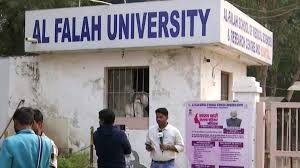 Al-Falah University began life as an engineering college and later expanded into medical education and a multi-campus trust system; its medical college and associated hospital draw students and patients from several regions. The university’s profile became part of news coverage after investigators reportedly discovered links between some individuals associated with the institution and ongoing terror-related probes. Journalists and police sources said that multiple staff members were under scrutiny in connection with separate seizures and arrests information that in turn seems to have motivated the online backlash.
It’s important to stress the difference between allegation and guilt. News outlets reported that certain faculty members were detained or questioned during investigative operations; the legal process to determine any criminal liability is ongoing. A website defacement does not establish institutional culpability, but it does show how fast reputational harm can occur when allegations and online vigilantism collide.
Who claimed responsibility and how reliable is that claim?
Several outlets quoted the defacement and pointed to the hacker collective identifying itself as the Indian Cyber Alliance. At least some of the screenshots and posts carrying that name were shared widely across social and private channels. Independent verification of the group’s identity or their motivations is often difficult anyone can slap a label on a hacked page but the public messaging and the group’s choice of language point to a vigilante-style nationalism rather than a criminal extortion attempt.
Law enforcement, cybersecurity experts, and university administrators typically treat such claims cautiously: a named group does not always mean a coordinated organization operating under that brand; it can be a single actor or a loose cell leveraging current events to amplify impact.
How authorities and the university responded
According to multiple local reports, the Al-Falah website was taken down and restored within hours after the breach. Cyber forensic teams and local police were reported to be investigating the intrusion; cyber cells routinely trace server logs and hosting records, examine timestamps, and look for the intrusion vector whether it was a vulnerable plugin, credential theft, or misconfigured hosting infrastructure. The Al-Falah university reportedly cooperated with police and restored services while reviewing internal security.
At the same time, central investigative agencies were pursuing the Red Fort probe, and that wider inquiry involved searches and seizures in Faridabad and adjoining districts. The juxtaposition of these two threads the counter-terror investigation and a high-profile website hack made incident management both technically and politically sensitive.
The legal and ethical implications of vigilante hacking
When private citizens or self-styled “patriotic” groups take action against institutions online, they cross several lines. Legally, unauthorized access and defacement are criminal offences under cybercrime statutes. Ethically, such acts risk inflaming communal tensions and can interfere with active investigations by compromising evidence or inadvertently destroying logs that are needed for prosecutorial work. Vigilante actions can also harm students, staff, and patients who depend on the Al-Falah university’s services and who may have no connection to alleged wrongdoing.
From an enforcement perspective, the best practice is clear: allegations must be handled through lawful investigation and courts, not through online shaming or intimidation. Cyber vigilantism complicates rule-of-law responses and often triggers copycat actions that widen the security problem.
Technical lessons: how universities can harden digital defenses
 Al-Falah University websites are common targets because they host public information, student portals, email systems, and sometimes research data. When political tensions spike, these sites can become pressure points. Basic cyber hygiene steps would have reduced the likelihood and impact of this kind of intrusion:
• Keep CMS, plugins and server OS up to date.
• Enforce strong, rotating credentials and MFA for administrative logins.
• Segment internal systems so a public-facing CMS compromise does not expose student or patient records.
• Maintain offsite backups and an incident response plan for quick restoration.
• Engage a security operations partner for 24/7 monitoring and threat hunting.
The Al-Falah incident underscores why institutions that provide critical services must treat cybersecurity as a core governance priority rather than a technical afterthought.
Wider consequences: social cohesion, media, and policy
A hacked Al-Falah website posting inflammatory content during an active terrorism investigation is more than an IT incident it ripples through journalism, law enforcement, and public sentiment. Media coverage can amplify the breach; social platforms can spread screenshots and rumours; communities may react emotionally before facts are verified. That creates a twofold risk: social unrest and misinformation.
Policymakers and institutions should consider two parallel responses:
(1) stronger cybercrime deterrence and faster forensic capacity
(2) public communication strategies that de-escalate tensions by providing verified, timely information and setting expectations about due process.
What to watch next
The ongoing story has several moving parts to follow:
• Official cybercrime findings: will police name suspects or attribution for the defacement?
• The Red Fort investigation: whether intelligence links to any institutional actors are substantiated in a court of law.
• Al-Falah University actions: what governance, security or public relations steps Al-Falah takes to reassure students and stakeholders.
• Policy reactions: whether state and central authorities strengthen guidance for institutional cyber resilience and rapid response.
Until investigators complete their work, readers should treat press reports as provisional and avoid amplifying screenshots or unverified claims.
The Al-Falah website hack is a stark example of how quickly digital and physical security concerns can intertwine in a crisis. A criminal probe into a violent incident can trigger online responses that are themselves unlawful, damaging, and counterproductive. The right response by authorities, institutions, and citizens is to let investigations proceed legally, protect due process, and strengthen cyber and communications resilience so that public infrastructure cannot be weaponized in moments of national stress.
If there is a single lesson here, it is this: in an age of instant sharing, institutions must prepare for both the physical and digital consequences of breaking news. Public safety depends on doing both well. To know more update subscribe Jatininfo.in now.