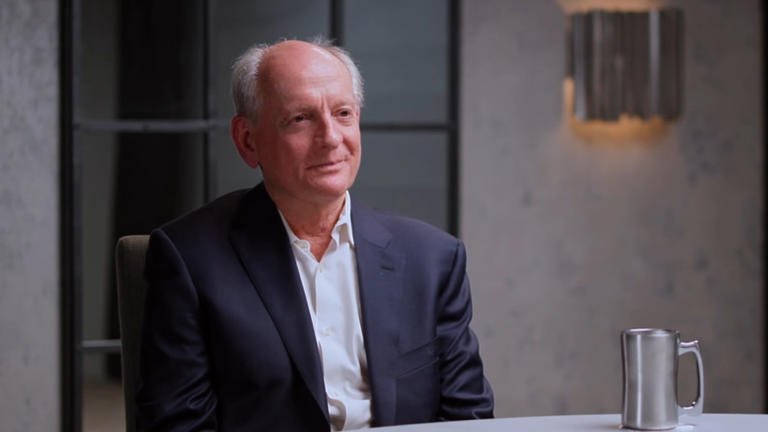
Every few months, the tech world throws a prediction at us that sounds dramatic at first, but then slowly starts making sense as we look around. Stuart Russell’s recent warning about artificial intelligence wiping out nearly 80% of human jobs falls into that category. It’s shocking, sure. But when you sit with it for a moment, it stops sounding like a futuristic horror story and more like something we can already see forming around us.
AI isn’t creeping into workplaces anymore it’s practically sprinting, knocking down departments and reshaping entire industries before most people even understand what’s happening. Layoffs, automation tools, AI-powered decision systems… everything is shifting, whether we notice it or not.
And now Russell, one of the world’s most respected AI experts, says something many people were afraid to say out loud:
It’s not just coders or copywriters at risk. Even surgeons… and eventually CEOs the top of the hierarchy could be replaced.
A World Where Robots Learn Surgery in “Seven Seconds”
In the Diary of a CEO podcast, Russell made a comment that practically froze the tech world for a moment. He said that if a robot physician is trained on thousands or millions of surgical videos, it could learn how to perform surgery better than any human in around seven seconds. Seven. Seconds. For comparison, medical students spend years memorising human anatomy, another decade perfecting surgical techniques, and then even more years mastering precision. AI doesn’t need rest. It doesn’t need sleep. It doesn’t need reassurance. It doesn’t worry about patients suing it after a mistake. It learns insanely fast and it doesn’t stop.
If that level of capability becomes normal, what happens to human surgeons?
What happens to medical students currently spending ₹1.5 crore on degrees?
What happens to the patients who would rather trust a system that never shakes, never hesitates, and never gets tired?
It is uncomfortable to think about and maybe that’s the point.
Coders, Designers, and Analysts Thought They Were Safe Until They Weren’t
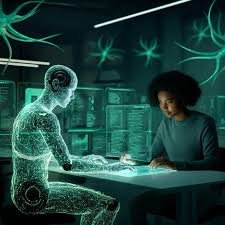 Not long ago, people said, “Artificial Intelligence might affect basic jobs, but high-skilled roles will always require humans.”
And yet today, AI writes code, audits databases, creates full designs, drafts legal documents, analyses contracts, and even performs functions that once needed entire teams.
Your job title no longer protects you.
And that’s exactly why Russell’s warning hit so hard. Because he’s not talking about “future possibilities.” He’s talking about patterns that are already visible.
He even pointed out that AI is now performing:
-
Planning
-
Reasoning
-
Knowledge work
-
Manual repetitive decision tasks
-
Technical problem-solving
In simpler words: anything an office needs done, AI is getting better at it.
And once companies figure out how to use AI efficiently, layoffs aren’t a maybe they’re a guarantee.
If CEOs Can Go Next, Who Exactly Is Safe?
The part that stunned the world wasn’t even the talk about surgeons.
It was what Russell said about CEOs.
He described a future where company boards might tell their CEOs:
“Unless you hand over your decision-making to an AI system, we’ll have to fire you. Our competitors are using AI-powered CEOs, and they’re doing better.”
Imagine that.
The top seat in the company the person with the highest income and the biggest power replaced by a machine that doesn’t negotiate salaries, doesn’t take vacations, and doesn’t make emotional decisions.
Google’s CEO Sundar Pichai recently said something similar: “What a CEO does may be one of the easier things for AI to do eventually.”
When two of the world’s biggest voices in tech say the same thing… maybe we should listen.
Because if leadership itself becomes automated, the idea of job “safety” disappears completely.
80% Unemployment Is Not Just a Number
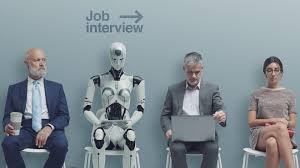 The scariest statement from Russell was this:
“Societies are now staring 80% unemployment in the face.”
It’s the kind of prediction that forces you to stop whatever you’re doing and rethink everything. Because an 80% unemployment rate doesn’t just lead to panic it leads to:
-
Massive economic imbalance
-
Social unrest
-
Collapsing industries
-
A complete rewriting of how humans work and survive
Millions of people won’t just lose jobs. They will lose identity, routine, stability, purpose, confidence everything we build our lives around.
Some experts like Andrew Yang have said one-third of US jobs will vanish. Others say tens of millions will be restructured. But Russell takes the boldest stand: that almost no job is safe.
It’s not fun to think about, but ignoring it won’t stop it from coming.
Are There Voices Who Disagree?
Interestingly, not every AI expert believes in the “job apocalypse” theory. Nvidia’s Jensen Huang thinks AI will transform work, not destroy it. Meta’s Yann LeCun believes AI will complement humans, not replace them. This is where the confusion begins. Two groups of geniuses, both deeply knowledgeable, both highly experienced yet completely opposite predictions.
Yes, AI might create new opportunities. Yes, humans may still hold roles requiring ethics, empathy, and complex judgment. But at the same time, companies will absolutely cut costs whenever possible. And AI is the biggest cost-cutting tool in human history. Both outcomes can exist transformation and elimination.
We Are Entering A New Era And Nobody Prepared Us For It
For decades, people feared robots taking over factories. But nobody warned us that robots would take over offices first.
The disruption is already here:
-
Writers replaced
-
Call centres replaced
-
Coders partially replaced
-
Graphic designers replaced
-
Marketing teams replaced
-
Analysts replaced
What comes next is not a mystery. It’s a progression.
And that’s why Russell’s warning feels less like a prediction and more like a mirror reflecting where we are headed.
So What Do We Do Now?
No blog can offer a perfect solution, but a few truths are becoming clearer:
1. Skills must evolve faster than ever.
If your skill can be automated, you need a second skill that cannot be automated — at least not yet.
2. AI literacy is no longer optional.
Those who know how to use AI will replace those who don’t.
3. Governments must respond before industries collapse.
Russell warns that every government is heading into a crisis they aren’t prepared for.
4. Income models may change
Universal basic income, shorter workweeks, new job categories everything is on the table now.
5. People need to rethink what “career” even means.
The old path study, get job, work 30 years may disappear.
AI Isn’t Coming for Jobs It’s Coming for Systems
Stuart Russell’s message isn’t meant to terrify; it’s meant to wake us up.
AI isn’t just replacing tasks it’s reshaping how society functions.
Jobs are only the first chapter. Decision-making, governance, healthcare, and leadership are next.
The question is no longer “Will AI replace us?”
It’s “How fast… and will we adapt before the world moves on without us?”
We’re living in the middle of the biggest shift in human history, and whether Russell’s 80% prediction comes true or not, one thing is undeniable:
The world of work will not look the same in five years. And in fifteen years, it may not look human at all. To know more subscribe Jatininfo.in now.