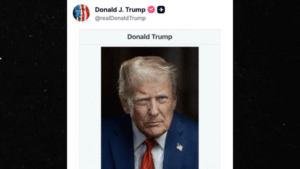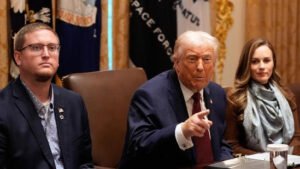
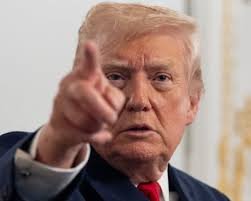
When former U.S. President Donald Trump promised to “permanently pause migration from all Third World Countries,” he didn’t speak quietly. He delivered the message with a calculated punch, designed not only to get attention, but to stir emotion, rekindle old anxieties, and reinforce his vision of America as a fortress under siege. The statement arrived through Truth Social his favored megaphone in the aftermath of a shocking incident near the White House, where a National Guard member was shot and later died. Investigators reportedly linked the attack to an Afghan national.
The tragedy quickly morphed into a political weapon. Within hours, Trump framed the killing not as the act of a single individual, but as evidence of a failed immigration policy threatening the fabric of the United States. For those familiar with his earlier presidency, the tone sounded familiar a revival of the message that brought him to power in 2016.
But this time, his words carried an even sharper edge.
A Revival of Hardline Immigration Politics
 During his first presidential term, Trump imposed travel bans, restricted refugee intake, and executed mass deportation strategies. His critics called it xenophobic; his supporters hailed it as necessary self-defense. Now, in the current political climate, he returns with stricter promises: no more federal benefits to “noncitizens,” a system to “denaturalize migrants who undermine domestic tranquility,” and deportation for anyone deemed a “public charge” or “non-compatible with Western civilization.”
These statements were not crafted for a legal policy paper. They were carved for headlines, rallies, and social media feeds urgent, decisive, and provocative. The language was intentionally crude, rooted in shock-value and nationalism. Terms like Third World Countries a relic of Cold War vocabulary carry layers of condescension, suggesting that entire continents are unfit to contribute to American life.
And yet, like many of Trump’s declarations, this message resonates with a portion of the U.S. electorate that feels left behind or threatened. They see immigration not as a humanitarian question but as an invasion. The death of a serviceman near the White House becomes a symbol, not an isolated tragedy. A single Afghan becomes the embodiment of millions.
How a Crime Becomes a Campaign Tool
Every democracy plays politics with tragedy, but Trump’s approach is surgical. He identifies fear, amplifies it, and links it to a broad category of people — in this case, migrants from poorer nations. He does not wait for investigations to conclude, nor does he entertain nuance. The narrative is simple: You are in danger. I am the only one willing to defend you.
Human psychology responds deeply to narratives of threat. A single violent incident attracts more attention than thousands of peaceful interactions. And a security failure near the White House the symbolic center of American stability becomes the perfect stage.
Inside political consulting circles, the tactic is well known: “Weaponize the exception.” It turns statistical rarity into political fuel. Most immigrants live quietly, work legally, and contribute to their communities. That truth rarely dominates online feeds. Fear, rage, and grief do.
The Language of Exclusion
Trump’s wording is not accidental. To say “Third World Countries” is to create a wall of cultural hierarchy. The term lumps together South Asia, Africa, Latin America, Southeast Asia, and parts of the Middle East billions of individuals, millions of migrants, and a vibrant diaspora who already live legally in the United States.
When he promises to pause migration, what does that mean?
Students? Workers? Asylum seekers? Refugees? Tourists? Skilled engineers? Nurses? Doctors?
The statement does not differentiate and that ambiguity is the point.
Complexity weakens political fireworks. Simplicity sells.
The additional promise to denaturalize migrants adds another layer of alarm. Citizenship the final guarantee of belonging would no longer be permanent. For immigrant communities, this is not a policy; it is an existential threat. It suggests that even if you build a career, raise a family, pay taxes, or serve in the military, your place in America could still be revocable.
A Strategy Aimed at 2026 and Beyond
 If Trump intends to shape the political narrative heading into the next election cycle, immigration offers a direct line to voter emotion. Economic policy is messy, healthcare reform is complicated, and foreign policy requires patience. Immigration, however, delivers immediate imagery: crowds at borders, detention camps, police raids, overflowing shelters.
It is visual. It is emotional.
And most importantly, it divides.
By picking a phrase like “non-compatible with Western civilization,” Trump goes beyond immigration and steps into cultural warfare. It is not just about legal documentation or border security it is about identity. Who gets to live inside the Western world? Who embodies its values? Who corrupts them?
Such rhetoric is dangerous precisely because it invites people to sort themselves and others into tribes us versus them, civilized versus uncivilized, legitimate versus parasitic.
How Opponents Respond and Why It Often Fails
Critics will, of course, respond with outrage, condemning the language as racist or authoritarian. They will cite history, law, and ethics. They will remind voters that America is built on immigration, that innovation comes from foreign-born scientists, that its workforce relies on international labor.
All true.
All factually grounded.
And yet, in the arena of political persuasion, facts alone rarely win.
Trump understands something his opponents frequently ignore: voters are moved by feelings, not spreadsheets.
A father in Ohio who fears job loss does not care that immigration improves GDP.
A mother in Texas who sees news about border caravans does not look up crime statistics.
They respond to stories.
To symbols.
To strong language.
Trump’s statements serve as emotional shortcuts cues meant to bypass debate and hit the nervous system directly. By linking immigration to the death of a soldier, he merges patriotism with resentment. Who dares to argue against protecting American troops?
The Moral Fork in America’s Road
The United States now faces a choice much larger than immigration quotas. It must decide whether it wants to define itself by inclusion or fear. Every nation has the right to protect its borders and enforce laws. But the idea of permanently banning people from entire regions of the world echoes a darker past — one shaped by segregation, colonial prejudice, and ethnocentric worldviews.
Trump’s words are not random. They are part of a consistent philosophy:
America must be defended from outsiders because outsiders cannot be trusted to respect it.
If he and his supporters succeed in normalizing that idea, the implications reach beyond migrants. It affects foreign students on scholarships, tech workers in Silicon Valley, nurses in Florida hospitals, cab drivers in New York City, and even the millions of legal immigrants who already make America function day to day.
The political theater will intensify. Trump’s campaign will broadcast the tragedy near the White House as proof that his border-first vision is necessary. Immigration will be recast as warfare. Every crime involving a foreign national will be amplified. Every success story of migrants contributing to the country will be buried beneath louder headlines.
What the Trump really needs a structured, humane policy informed by data may once again disappear beneath the fog of rhetoric.
For millions of families waiting on visas, for students preparing to enter American universities, for workers building careers in technology, medicine, and agriculture, uncertainty will linger. What should have been a discussion about reform becomes a battleground of fear.
And somewhere behind the drama lies an uncomfortable truth:
America is deciding not who gets to enter its borders, but who it wishes to become. To know more subscribe Jatininfo.in now.