

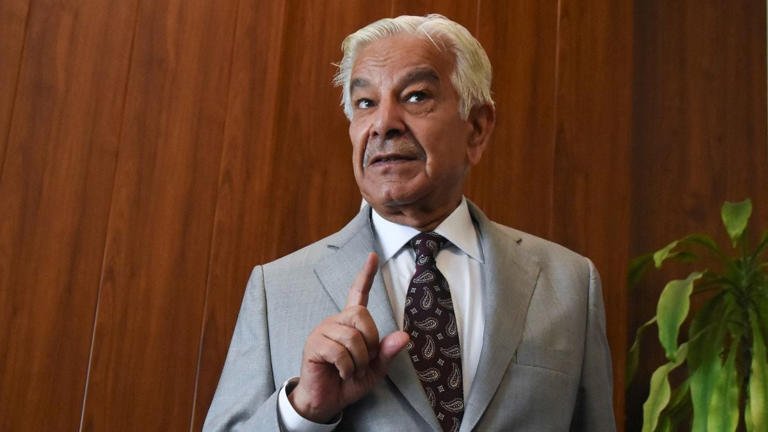
Tensions between India and Pakistan have never truly disappeared, but every few months, statements from either side add a new layer of worry. This time, the spark comes from Pakistan’s Defence Minister Khawaja Asif, who has warned that Islamabad must prepare for the possibility of an “all-out war” with India.
The statement, made during an interview with Samaa TV, has triggered fresh debate across policy circles, especially because it comes at a moment when the region is still dealing with terrorism incidents, cross-border accusations, and a visible hardening of positions on both sides.
What makes Asif’s comments important is not just the warning itself, but the way he framed it a mix of accusation, anxiety, and an attempt to rally Pakistan’s internal political audience. And while New Delhi has not responded directly to him, the Indian Army Chief’s recent remarks leave no confusion about India’s stance.
Let’s break down what’s happening, why these statements matter, and what it could mean for the region.
A Warning That Sounds More Like an Alarm
In the Samaa TV interview, Khawaja Asif didn’t mince words. He said Pakistan must remain on “maximum alert for any border incursion” and Asif claimed that India could launch coordinated attacks from the border or even escalate it into a larger conflict.
Asif emphasized:
“We cannot trust India in any way… We cannot rule out an attack. India can go for an all-out war as per its strategy.”
For a Pakistan’s Defence Minister Khawaja Asif, to make such a statement publicly is unusual unless the government wants to signal something either to India or to Pakistan’s own citizens.
Pakistan’s Defence Minister Khawaja Asif, tone was deliberate. He portrayed Pakistan as a country surrounded by hostility, not just from India but also from instability spilling over from Afghanistan. According to him, Pakistan is effectively facing a “two-front war.”
This phrase has been used many times by Pakistani leaders in the past few years, but now it appears to be a full-fledged narrative that Islamabad is leaning on more aggressively.
The Afghanistan Angle: A Convenient Narrative or a Real Concern?
Pakistan’s Defence Minister Khawaja Asif’s interview had repeated references to Afghanistan, specifically the claim that India is using Afghan territory to carry out attacks on Pakistan.
India has firmly rejected this theory many times, calling it baseless and politically motivated. Analysts also find it hard to believe, given that India’s diplomatic presence in Afghanistan has dramatically reduced since 2021.
However, the idea works well within Pakistan’s internal messaging. It sets up a picture where:
-
India is the external enemy
-
Afghanistan is the source of chaos
-
Pakistan is the victim caught between two fronts
This narrative is politically useful, especially during times of economic burden, internal political disagreement, or rising militancy.
Multiple reports show Pakistan facing increasing attacks from Tehreek-e-Taliban Pakistan (TTP) militants, most of whom operate from Afghanistan. So while the threat from Afghanistan is certainly real, attaching India’s name to it adds a strategic twist that shifts blame outward.
Why Now? What Pushed Asif to Make Such a Statement?
 These remarks didn’t appear out of thin air. They came soon after India’s Chief of Army Staff, General Upendra Dwivedi, issued a sharp warning during the Chanakya Defence Dialogue in New Delhi.
Referring to the recent Operation Sindoor, he said:
“Operation Sindoor was just a trailer. If Pakistan gives a chance, we will teach it how to behave responsibly.”
Strong words especially coming from India’s top military leader.
Operation Sindoor, which concluded in just 88 hours, targeted and eliminated militants responsible for terrorism in Jammu and Kashmir. According to the Indian Army, 31 terrorists were killed, many of whom were Pakistani nationals or had links to groups operating with support from within Pakistan.
General Dwivedi did not name Pakistan directly when talking about “state-sponsored terrorism,” but the implication was unmistakable.
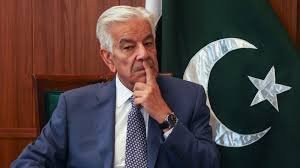
When India publicly links Pakistan to cross-border terrorism, Islamabad often responds sharply to reassert its own narrative. Pakistan’s Defence Minister Khawaja Asif, comments are very likely a direct reaction to India’s messaging.
Pakistan’s Internal Pressures Are Growing
Behind Pakistan’s Defence Minister Khawaja Asif, tone lies something deeper Pakistan today is under severe political, economic, and security stress.
1. The Economic Crisis
Inflation is high, reserves are fragile, and the IMF’s conditions are squeezing the middle class. When a government faces this level of economic pressure, tough rhetoric against external “enemies” often becomes a cushion.
2. Rising Militancy
TTP attacks have risen sharply along the Afghan border. Pakistan has accused Kabul of not doing enough, but Afghan authorities deny supporting militants.
3. Civil-Military Tensions
Pakistan’s political corridors have been noisy for months. Whenever civil leadership faces domestic pressure, strong external statements often appear — partly to unify the narrative, partly to deflect attention.
In such an environment, talking about the “threat from India” works almost like a political glue.
India’s Position: Firm, Unapologetic, and Increasingly Assertive
While Pakistan has been speaking more loudly in recent months, India’s approach has been consistent: zero tolerance for terrorism and clear readiness for retaliation when needed.
General Dwivedi’s “just a trailer” comment wasn’t an isolated remark. It reflects a pattern India has maintained since the Uri attack (2016) and the Pulwama-Balakot episode (2019).
New Delhi’s messaging has been:
-
Terrorism will be met with force
-
Any attack on Indian soil will have consequences
-
Pakistan cannot hide behind proxy groups
The Indian Army chief also highlighted how recruitment for militancy in Kashmir has dropped significantly a signal that India is tightening control and reducing the space for externally supported militancy.
This context makes Asif’s “all-out war” warning appear more like political signaling than an actual possibility.
Is an ‘All-Out War’ Really on the Table?
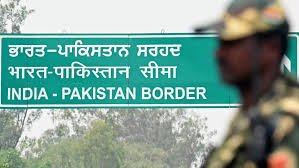
Despite the bold statements from both sides, a full-scale war between India and Pakistan remains highly unlikely.
Several reasons stand out:
 1. Nuclear Deterrence
Both nations possess nuclear capabilities. Even limited conflict carries unpredictable risks. Neither country wants a scenario where an escalation spirals out of control.
2. International Pressure
The global community particularly the US, China, and Gulf nations has no interest in seeing South Asia destabilized. They would intervene diplomatically before things reach a breaking point.
3. Economic Costs
Pakistan’s economy cannot sustain a large conflict. Even India, despite being economically stronger, has no strategic motivation to pursue war when focused on growth and development priorities.
4. Past Behaviour
Historically, despite heated rhetoric, both countries step back from actual escalation Kargil being the rare exception forced by circumstances.
So, while the language may sound dramatic, experts interpret it more as posturing than preparation.
Why Statements Like These Still Matter
Even if an actual war is improbable, rhetoric has consequences.
1. It Elevates Tension Along the Border
Military units on both sides react to political statements. Heightened alert means increased troop movement, which sometimes leads to misunderstandings.
2. It Impacts Diplomatic Channels
Whenever Pakistan escalates its tone, backchannel talks slow down. Confidence-building measures stall. Any progress instantly freezes.
3. It Shapes Public Perception
Pakistan’s Defence Minister Khawaja Asif, Statements like “all-out war” fuel mistrust among citizens of both countries. It becomes harder to create space for diplomacy.
4. It Influences Global Stakeholders
Major foreign powers monitor every word closely. Sudden spikes in rhetoric affect investment sentiment and regional planning.
So, while war may be unlikely, instability becomes very real.
The Bigger Picture: Competing Narratives, Not Imminent Conflict
Strip away the noise, and one reality remains: both India and Pakistan are trying to shape public narratives.
India’s narrative:
Cross-border terrorism must stop, and the army is fully capable of responding decisively.
Pakistan’s narrative:
India is an aggressive neighbour preparing for war, and Pakistan is the victim of both India and Afghanistan.
Both narratives serve domestic politics.
Both rally their respective audiences.
Both strengthen leadership during difficult phases.
But neither indicates that a war is imminent.
So, What Should We Expect Next?
The coming weeks are likely to see:
-
more political commentary from Pakistan
-
firm rebuttals or silence from India
-
heightened border alertness
-
increased diplomatic engagement from international players
-
intensified media narratives on both sides
However, there is no evidence of actual war preparation beyond routine military readiness that both countries maintain.
If anything, Asif’s words highlight Pakistan’s internal anxiety more than India’s external intentions.
Khawaja Asif’s warning about an “all-out war” with India may sound dramatic, but in South Asian politics, such statements often carry more political weight than strategic meaning.
India’s response has been measured but firm centred around its campaign against terrorism rather than war rhetoric. Pakistan, on the other hand, seems to be navigating a complicated mix of economic distress, internal security issues, and political pressure.
The truth is simple:
Neither nation wants a war.
Both want to control the narrative.
As long as those narratives stay louder than actual military actions, the situation, though tense, remains contained. But rhetoric is a dangerous tool. And in a region as sensitive as South Asia, even words can push the needle if not toward war, then at least toward deeper mistrust. To know more subscribe Jatininfo.in now.