There are moments in a country’s political life when you can feel, almost instinctively, that something big is shifting beneath the surface. Pakistan is standing in one of those moments right now. The Parliament recently passed the 27th Constitutional Amendment, a move that appears technical on paper but carries consequences that are anything but ordinary. And as soon as the amendment cleared the legislative hurdles, political temperature shot up dramatically.
The key reason is simple: The amendment gives sweeping new powers to Army Chief Field Marshal Asim Munir, reshaping the civil-military balance in a way that many believe Pakistan hasn’t witnessed in decades.
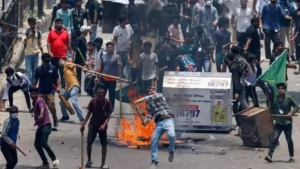
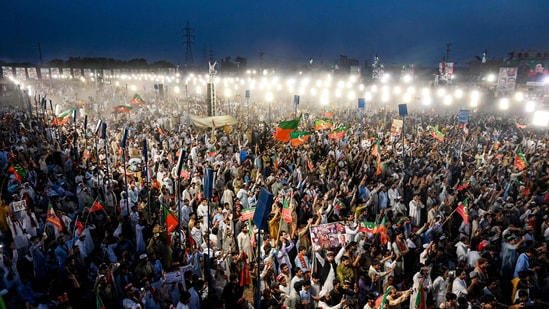
Within hours, the opposition alliance a mix of parties normally at odds with one another announced nationwide protests. Not just press conferences or symbolic rallies, but full-scale street mobilization. They didn’t even pretend this was “routine politics.” They said openly: “This is a battle for the Constitution.”
And that sentence alone tells you the mood on the ground.
What Exactly Is in the 27th Constitutional Amendment?
If we cut through the jargon, the amendment does three things that have set off alarms:
 1. A Powerful New Post for the Army Chief
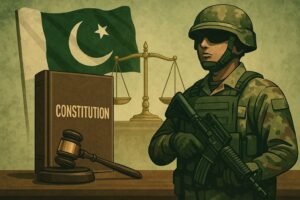
A new constitutional position has been created, one that places the Army Chief at the top of a unified command structure. It effectively elevates Asim Munir to a role that outshines every civilian office except the presidency and even that is debatable.
2. Lifetime Immunity From Criminal Prosecution
This is one of the hottest flashpoints. The amendment ensures that Asim Munir cannot be prosecuted for actions during his service not now, not after retirement, not ever. For a country that has struggled with accountability across institutions, this clause feels like a brick wall erected right in front of future legal challenges.
3. Reshaping the Judiciary
The creation of a Federal Constitutional Court (FCC), which will take over many core responsibilities of the Supreme Court, has rattled lawyers, judges, and civil society. Critics believe this weakens judicial independence and creates a parallel system controlled indirectly by the executive.
When you combine these elements, it becomes clear why this amendment hasn’t been received as a normal political development. It feels more like a structural rearrangement of Pakistan’s power pyramid.
Opposition Finds Common Ground For the First Time in a Long Time
If you’ve followed Pakistan’s politics, you know how difficult it is for major opposition parties to agree on anything. They argue even when they’re on the same side. But this amendment has done something extraordinary:
It has forced rivals to close ranks.
Parties that barely shook hands a few months ago are now planning rallies together. They call themselves TTAP (Tehreek-e-Tahafuz-e-Aayeen-Pakistan), a name that translates to “Movement to Protect the Constitution.”
Their message is blunt:
“Someone has to draw a line. If we don’t speak now, we may never be able to speak again.”
From Quetta to Peshawar, Karachi to Lahore, the alliance has announced coordinated marches, street corners speeches, district-level sit-ins, and a long list of demonstrations that will continue unless the amendment is withdrawn or reviewed.
Why Are They Calling It a Threat to Democracy?
For many opposition leaders, this amendment is not just about one man holding more authority. It is about what that authority represents.
Let’s break down their main arguments, not in legal terms, but the way ordinary Pakistanis are discussing it:
“Too Much Power in One Chair”
Pakistan has always had a tense civil-military relationship. Historically, whenever one institution accumulated too much power, political instability followed. Critics fear the amendment takes Pakistan back to that dangerous pattern.
“Judiciary Shouldn’t Be Reshaped Overnight”
The Federal Constitutional Court has scared people more than the political class expected. After all, the Supreme Court has been the last refuge for civil liberties in many cases. Creating a new court with judges chosen through a process influenced by the government raises suspicions about long-term motives.
“Immunity Means No Accountability”
Lifetime immunity feels unnatural to most citizens. Why should any public figure military or civilian be placed beyond the reach of the law permanently?
“The Constitution Isn’t a Toy”
Legal experts argue that such a major shift should have involved national debate, not fast-tracked legislation.
When you look at these arguments collectively, you understand why even neutral voices are talking about “a turning point.”
How the Government Defends the Amendment
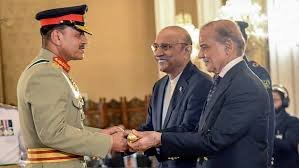 The government insists the opposition is overreacting.
Their main talking points include:
-
The amendment strengthens national security.
-
The unified command structure will help streamline defence strategy.
-
Immunity protects the office, not the individual.
-
The FCC will reduce the Supreme Court’s caseload.
-
The amendment modernizes outdated constitutional frameworks.
You may agree or disagree with this explanation, but here’s the reality: These arguments have not calmed the public mood not even slightly. In fact, they’ve made people ask more questions.
Streets Are Heating Up: What’s Happening on the Ground?
Even before the official protest dates, political camps and community groups have begun organizing:
-
Student organizations are holding classroom discussions.
-
Local party offices are distributing pamphlets.
-
Lawyers are planning “symbolic black-badge” marches in district courts.
-
Journalists are debating the amendment on every talk show.
Pakistan’s Youth: The Most Active Stakeholders This Time
One of the most surprising developments is the involvement of young Pakistanis. Many of them had become politically numb in recent years — tired of constant power struggles, court battles, and predictable blame games.
But the 27th Amendment has woken them up.
Why?
Because it touches on fundamentals:
power, fairness, rights, and institutional future.
On social media, especially X (Twitter), you can see teenagers, university students, and early-career professionals openly questioning:
-
Why immunity?
-
Why now?
-
Why so fast?
-
Why does Parliament move slow on economic reforms but fast on this?
This generational pushback is reshaping the conversation more than politicians anticipated.
While the amendment has supporters and critics, the majority of the population shares one feeling.
People don’t know where this road leads. Some think it will stabilize the system. Others believe it will produce long-term authoritarian tendencies. Many fear the conflict may enter the streets in ways no one wants.
What’s interesting is that even those who support Asim Munir personally do not fully approve of the amendment. They say things like:
“We respect the Army Chief, but no person should have unlimited constitutional protection.”
That sentiment tells you the public is not confused. They’re just worried.
The Opposition’s Strategy
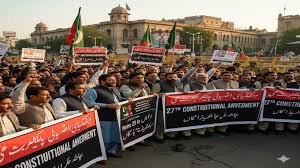 The TTAP alliance is not banking on one big march. They are preparing a slow-burn, sustained movement, which includes:
-
Weekly district-level rallies
-
Black-day observances
-
Public seminars
-
Mass mobilization through student unions
-
Lawyer-led marches to district courts
-
Citywide sit-ins if needed
They want to build pressure gradually. Not a sudden explosion, but a deep-rooted resistance. Their message is simple: “We don’t have control over institutions, but we still have control over streets.”
What Could Possibly Happen Next?
In politics, predicting the future is always risky, but Pakistan today seems to be moving toward one of the following paths:
1. The Protests Grow Bigger
If the public joins in force, the government may be pressured to reconsider the amendment or at least negotiate revisions.
2. The Amendment Stays, But Political Tension Rises
A permanent change in the civil-military balance could lead to long-term friction.
3. A Judicial Challenge Emerges
Even with the FCC, the Supreme Court may still see petitions arguing against the amendment’s constitutionality.
4. Crackdown & Escalation
If the government responds harshly to protests, the situation could turn volatile something no one wants but remains a possibility.
5. A Political Realignment
Pakistan’s political history is full of unexpected alliances. This amendment might trigger new coalitions or surprising partnerships.
Why This Moment Truly Matters
Whether you support the opposition or not, the debate around the 27th Amendment matters because it forces Pakistan to confront big questions:
-
Should any institution be placed above scrutiny?
-
Should the Constitution be revised without wider debate?
-
Should the judiciary be reshuffled mid-crisis?
-
Should legal immunity be granted for life?
-
Should power be centralized in such an extraordinary manner?
These aren’t small issues.
These are foundational.
And that’s precisely why the protests feel different they aren’t about party politics; they are about the future architecture of the state.
No one knows how long the protests will last. No one knows how the government will respond. And no one knows how far the constitutional changes will reshape Pakistan’s political landscape.
But one thing is absolutely clear: Pakistan has entered a decisive chapter.
When citizens step into the streets to defend the Constitution, it means something deeper is at stake than a political disagreement. It signals a nation questioning its identity, its institutions, and its future trajectory. The 27th Amendment may be written on paper but its impact will be written in history. To know more subscribe Jatininfo.in now.