
OpenAI is once again shaking things up. After changing how we write, search, and brainstorm, the company now seems ready to change how we talk not just with AI, but with each other.
They’ve quietly started testing group chats and direct messages (DMs) inside ChatGPT. At first, it sounds like a small update. But if you look closely, it’s one of those features that could completely redefine how we use AI day to day.
Because for the first time, ChatGPT might not just be your assistant it could become a part of your friend group, your work team, or even your study circle.
What Exactly Is OpenAI Testing?
So far, OpenAI hasn’t officially announced a full rollout. But early users in the test group have spotted a “Group Chat” feature inside their ChatGPT apps. This allows multiple people to chat together in one thread and ChatGPT can join in the same conversation.
Picture this: you, your colleague, and ChatGPT are all in one chat room. You’re discussing a marketing plan, and the AI helps generate ideas, rewrite a few lines, or even fact-check something in real-time.
Or imagine a group of students revising for an exam. They can ask ChatGPT a tough question, discuss answers together, and the AI helps guide them through what’s right or wrong.
That’s exactly what this new update is about bringing shared collaboration to ChatGPT.
The Move Makes Perfect Sense
If you think about it, this step feels almost obvious. ChatGPT started as a one-on-one tool, but the world doesn’t really work that way. Most of our work, studies, or even personal tasks involve teams, not solo efforts.
Businesses already rely on ChatGPT for writing, summarizing, and data analysis. But each person usually has to open their own chat. That’s repetitive and not very “team-friendly.”
With group chats, one person can ask something, and everyone in the group sees both the question and ChatGPT’s reply. No more “Can you share what ChatGPT said?” moments.
It’s faster, cleaner, and far more efficient.
DMs for ChatGPT? Yes, That Too
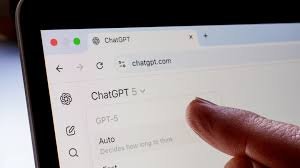 Another part of this test includes direct messages (DMs) kind of like a private chat system inside ChatGPT.
At first glance, that might sound unnecessary. But think about this: OpenAI has been slowly building ChatGPT into more than just a chatbot. It’s now a platform with files, voice features, and even image generation. Adding DMs means users can communicate directly perhaps to share projects, prompts, or feedback.
In the future, it’s easy to imagine ChatGPT becoming a hub for collaboration, not just question-answering.
A few screenshots have already appeared online (especially on Reddit and X), showing how group chats might look. There’s a shared window with all participants visible, and each person can message the AI just like they would message another human.
Some testers even noticed “@ChatGPT” tagging, meaning you can mention the AI directly if you want it to respond to a specific part of the discussion.
It feels a lot like how you tag people on Slack or Discord. In fact, that might be where this idea came from the goal seems to be mixing the ease of team chatting with the intelligence of an AI model.
What’s the Point?
So, why is OpenAI doing this now? The answer is pretty simple: people are already using ChatGPT in groups just not in the same chat.
Think of workplaces, classrooms, or even online communities. Everyone’s running their own ChatGPT conversations separately, sharing answers, copying text, and pasting screenshots. It’s messy.
With a built-in group chat, that entire process becomes natural. One workspace, one AI, everyone involved.
It’s also a smart move for OpenAI’s business model. ChatGPT’s Team and Enterprise plans are designed for collaboration and this feature fits perfectly into that.
Collaboration, Simplified
Let’s imagine how this could look in real life.
-
For teams: A small startup could use group chat to brainstorm product ideas. ChatGPT can join in, suggest names, write short descriptions, and improve the team’s content all in one place.
-
For classrooms: Teachers can host interactive sessions. Students ask questions, debate answers, and ChatGPT fills in knowledge gaps or gives examples.
-
For creators: Two writers working on a story could share one thread with ChatGPT to help shape characters or plotlines collaboratively.
This moves ChatGPT away from being a personal “assistant” to being a true group collaborator.
Privacy and Data Concerns
Now, let’s address the elephant in the room: privacy.
In a one-on-one chat, data usage is easy to control. But in a shared group chat, things get trickier. Who owns the data? Can all members see what others uploaded? Does OpenAI store everything?
We don’t have full answers yet, but it’s likely that OpenAI will handle this with the same approach it uses for Team and Enterprise users meaning, conversations stay private and aren’t used to train models.
That said, users will probably get settings to manage what’s shared with the group and what stays private. Transparency will be key here otherwise, it might make people hesitate to use the feature.
A Step Toward a “Social” ChatGPT
 When you think about it, this update does something interesting. It turns ChatGPT from a tool into a participant. Until now, you talked to OpenAI. Soon, you might talk with ChatGPT, alongside your friends, coworkers, or classmates. That changes the tone completely. The AI becomes part of the social fabric not just answering questions, but observing, summarizing, or giving feedback in a group setting. It’s easy to imagine how that could feel strange at first. Having an AI in your friend group chat? Weird. But useful? Definitely.
For example, you could ask it to plan a trip, suggest dinner options, or remind the group of deadlines all without switching apps.
If this feature rolls out publicly, OpenAI will step into a new category collaboration tools. That means it’ll start competing, indirectly, with Slack, Teams, and even Google Chat.
And honestly, OpenAI might have an edge. While others are adding AI assistants into chats, ChatGPT is the assistant. It already knows how to handle long conversations, follow context, and adapt tone.
So, instead of using Slack with AI integrations, you could just use ChatGPT as your workspace. That’s a bold but realistic direction for OpenAI to take.
What It Means for Everyday Users
For casual users, this is going to make ChatGPT feel more interactive and less isolating. You won’t have to explain to your friends what the AI said you can all see it, ask follow-ups, and even debate the answers together.
It might also make AI learning more accessible. Parents could join a shared chat with their kids to explore educational topics together. Study groups could collaborate with ChatGPT to prepare for exams.
And creators, especially in content and design fields, might use group chats as a shared brainstorming space.
The Road Ahead
Right now, everything’s still in testing. OpenAI hasn’t confirmed when (or if) it’ll reach everyone. But if the feedback is positive, we can expect to see group chats and DMs become standard in upcoming ChatGPT versions.
If that happens, ChatGPT could quietly turn into something we’ve never really seen before a mix of AI assistant, collaboration hub, and social communication tool.
It won’t just answer your questions. It’ll join your discussions.
At first glance, group chats and DMs might sound like just another update. But in reality, they hint at a bigger vision one where AI blends naturally into our daily communication.
Whether you’re planning, learning, or just chatting, ChatGPT could soon be sitting right there with you not replacing people, but making conversations more productive and insightful.
If this experiment works, OpenAI won’t just change how we talk to AI. It’ll change how we talk with each other, with AI in the mix. To know more subscribe Jatininfo.in now.